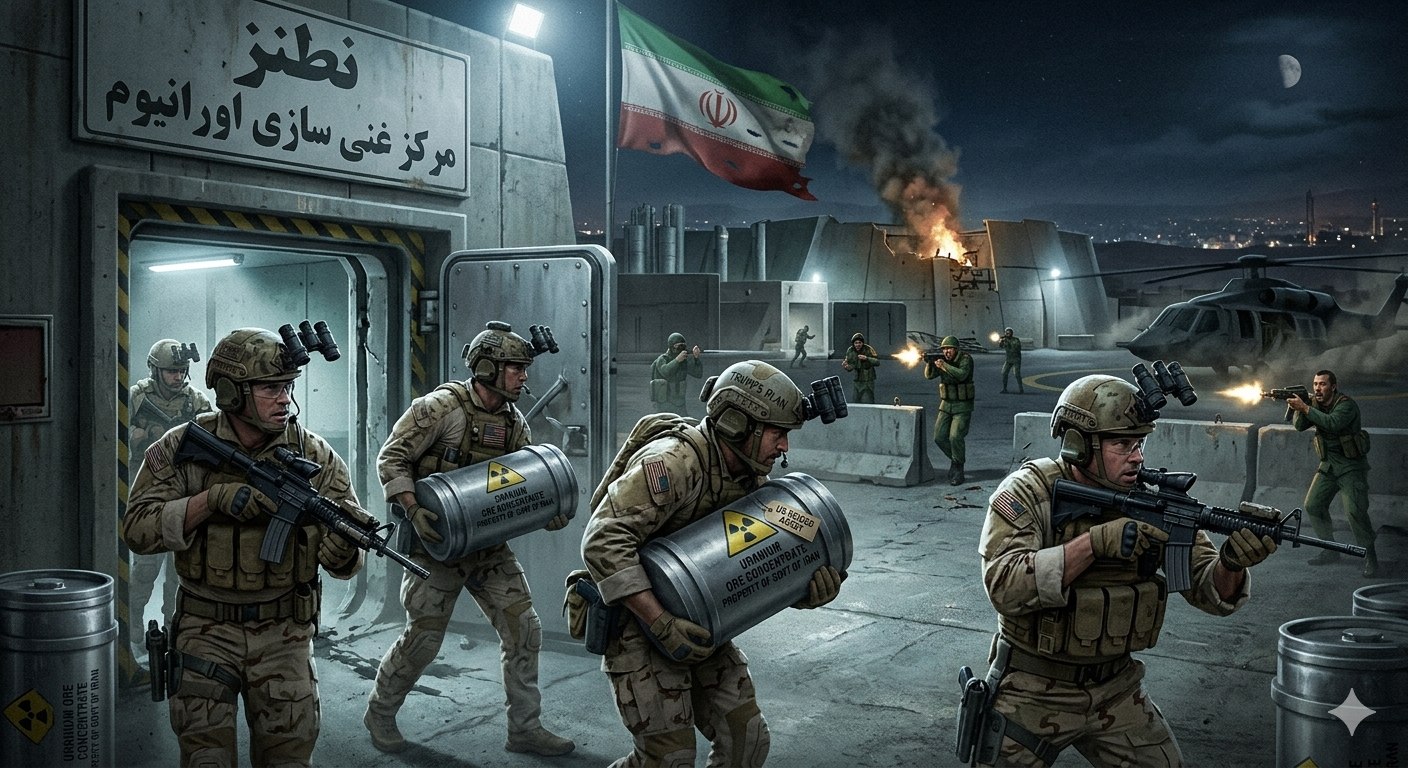
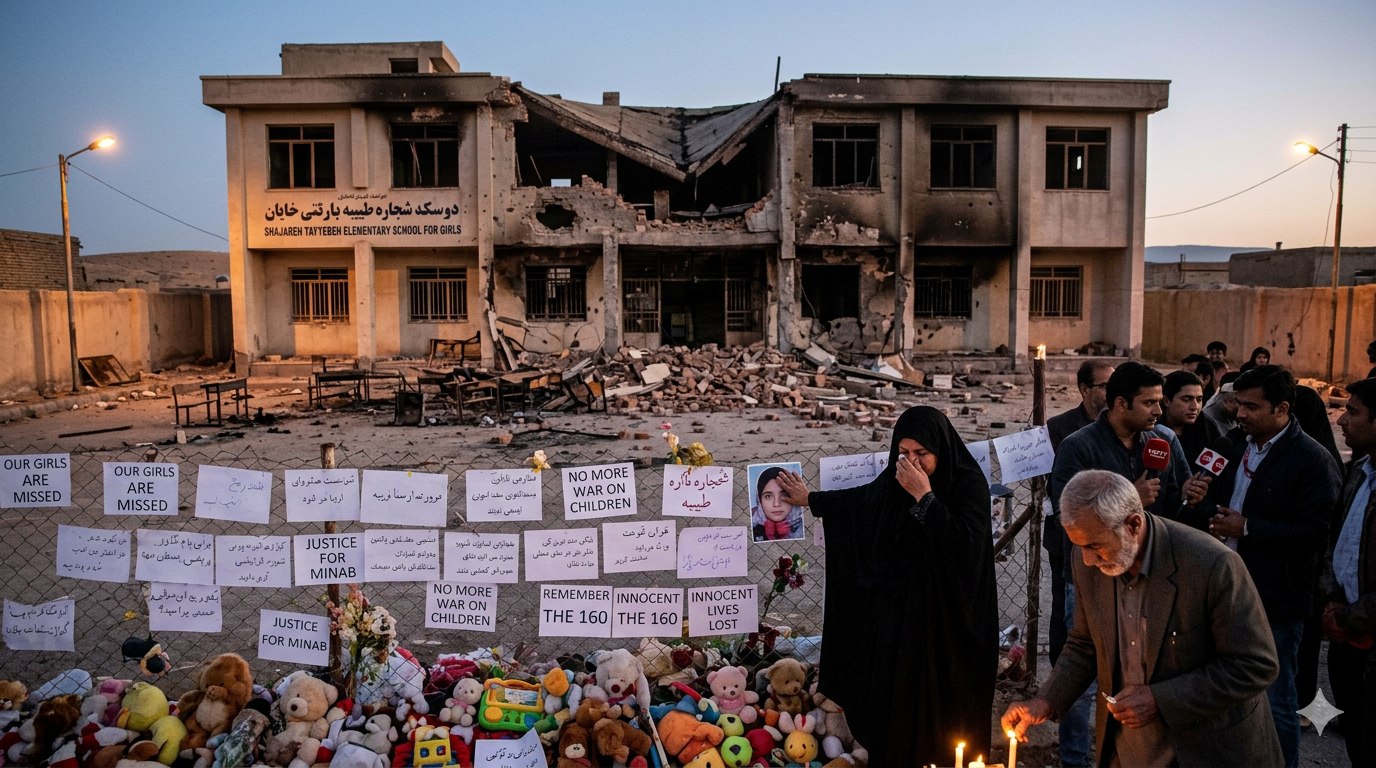
Minab, Iran: A single cruise missile that levelled the all-girls Minab Elementary School on the first night of the US-led Operation Epic Fury killed 170 children aged 7–12 and injured scores more. Evidence now indicates the weapon was a US Navy Tomahawk that strayed from its programmed co-ordinates for the adjacent Iranian naval compound.
The Geopolitical Reality
Washington and Tehran are locked in direct kinetic conflict for the first time since 1988. The school strike has become the conflict’s reputational pivot: European outlets, the UN High Commissioner for Human Rights, and even traditionally cautious US media have converged on the conclusion that outdated targeting data, not Iranian fire, caused the civilian catastrophe.
- Target: Iranian Navy base 120 m south-west of the school.
- Weapon: BGM-109 Tomahawk fired from a US destroyer in the northern Gulf.
- Outcome: Missile impact on school courtyard; structure totally collapsed.
President Donald Trump initially suggested Iran had acquired and misfired an American Tomahawk; he has since retreated to “under investigation” while noting that “numerous other nations” operate the missile. Only the UK, Australia and the Netherlands, however, are cleared for the latest Block IV variant, making external possession improbable.
“Only person in your government claiming this is you … I just don’t know enough about it.”
— Journalist question to President Trump, 26 April
Beijing, seeking to frame itself as a responsible stakeholder, has pledged USD 1.8 million in victim compensation, dwarfing any Western humanitarian gesture so far.
The View from Delhi
New Delhi has no military footprint in the US–Iran contest, but three interests are immediately engaged. First, energy volatility: every widening of the Hormuz war risk premium feeds directly into India’s import bill and domestic inflation dynamics. Second, citizen safety: 8–9 million Indian nationals reside in the Gulf; a prolonged campaign raises evacuation contingencies Delhi would rather avoid. Third, normative positioning: India has historically opposed external regime-change operations while defending strict state responsibility for civilian protection. A credible US error, if proven, undercuts Washington’s moral leverage in future non-proliferation or technology-denial debates that affect Indian access to dual-use systems.
Publicly, the Ministry of External Affairs expressed “grief over the deaths of children” without assigning blame—language calibrated to preserve operational space with both Washington and Tehran. Privately, Indian planners will note that precision-strike mythology—the marketing hook for every US platform India is offered—has suffered measurable brand damage, strengthening the hand of those in Delhi who argue for diversified suppliers and indigenous redundancy.
Strategic Implications
A rules-based order discourse already strained by Gaza casualties now confronts a major-power military striking a school full of girls. For India, the episode re-validates its long-standing caution against endorsing extra-territorial strikes lacking UN cover. It also complicates US efforts to enlist Delhi in any “coalition of responsibility” against Iran; Indian diplomats will demand unambiguous transparency on targeting protocols before associating with future operations.
Should the UN Human Rights Office open a formal file, Washington will press partners to vote against continuing investigations. India, as a current Human Rights Council member, will have to choose between abstention (its default) and an affirmative vote that preserves consistency with its civilian-protection rhetoric. Either way, the strategic autonomy doctrine will be stress-tested in a forum where Western capitals previously courted Indian alignment.
Finally, the Tomahawk’s market image matters. India operates the BrahMos cruise missile in contested scenarios; if the US flagship system can miss by 120 m, cost-benefit analyses for similar imported stand-off weapons lose persuasive power, bolstering the case for accelerated domestic programmes such as the LR-LACM and Nirbhay follow-ons.