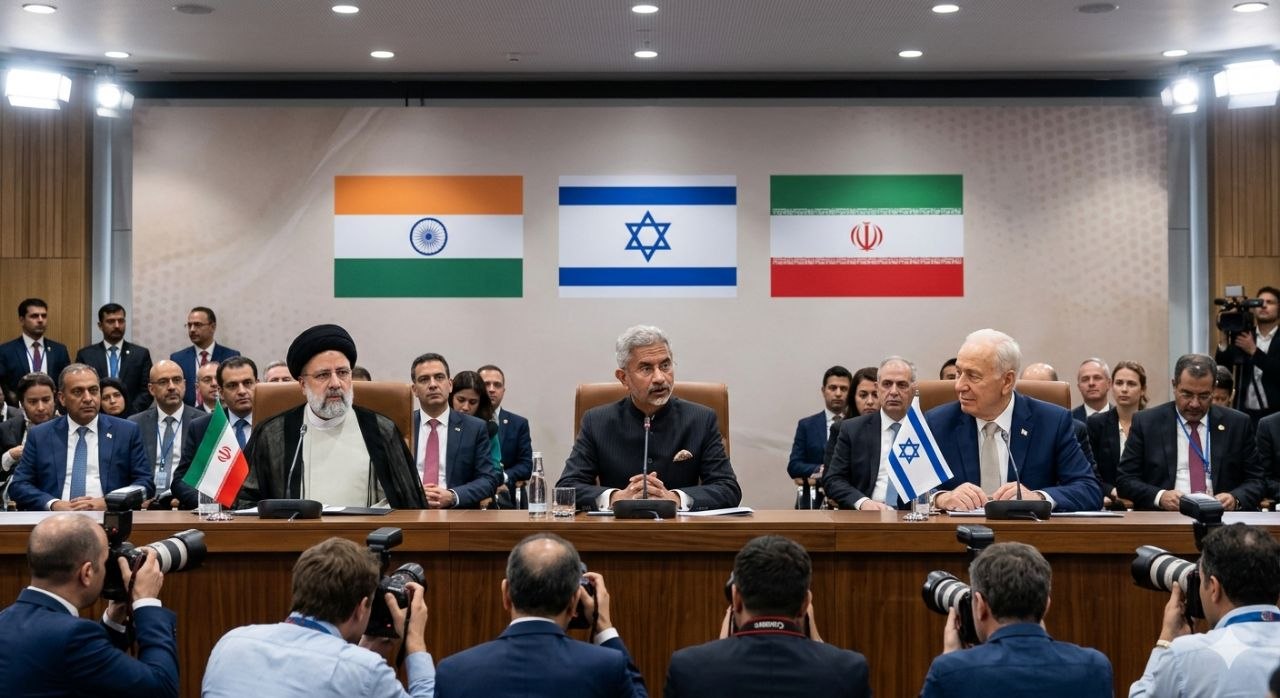
Tehran/Jerusalem: Iran and Israel have both issued statements rejecting any Pakistani mediation in their confrontation, undercutting weeks of Pakistani media narratives that portrayed Islamabad as an emerging peace broker. Tehran clarified it has not participated in any framework hosted by Pakistan, while an Israeli envoy stated that India would be a more credible interlocutor.
The Geopolitical Reality
Pakistan’s military-led government launched a multi-million-dollar international media campaign to showcase the country as a regional peacemaker. Articles placed in Western outlets claimed Pakistan was mediating between Iran, Israel and the United States, and that Islamabad had eclipsed New Delhi in diplomatic relevance.
- Campaign Budget: Millions of dollars routed through PR firms.
- Target Outlets: BBC, New York Times, Washington Post.
- Narrative: “Pakistan brokers cease-fire; India sidelined.”
Iran’s foreign ministry spokesman publicly denied involvement in any Pakistani initiative, stressing that “Pakistan is not a mediator” and that no Iranian delegation has entered talks under Islamabad’s auspices. An Israeli special envoy echoed the rejection, telling interlocutors that “India can be a better mediator than Pakistan” given its open channels to both Washington and Tehran.
“India can be a better mediator than Pakistan.”
— Israeli Special Envoy
The View from Delhi
For Indian planners, the episode is less about Pakistan’s temporary media traction and more about the structural limits of conflict mediation in West Asia. New Delhi has long positioned itself as a stakeholder, not a broker, in the Iran-Israel contest; its leverage rests on energy imports from Iran and defence-hardware exports to Israel, not on mediation mandates.
The public rebuff from both capitals confirms that regional actors prefer to keep escalation management within a U.S.-anchored framework or through direct back-channels. Any vacuum created by Pakistani over-reach is therefore unlikely to be filled by another South Asian state unless Washington explicitly requests assistance.
Strategic Implications
The failure of Islamabad’s PR drive highlights three constraints for middle powers seeking diplomatic centrality: adversarial relationships with key protagonists, limited economic leverage, and the absence of great-power endorsement. For India, the takeaway is that reputational gains in West Asia accrue from transactional reliability, not aspirational narratives.
Looking ahead, Tehran and Jerusalem will continue to calibrate escalation without external South Asian interlocutors. Delhi’s priority remains insulating its energy and diaspora assets from spill-over violence, while preserving optionality should Washington seek contingency support.