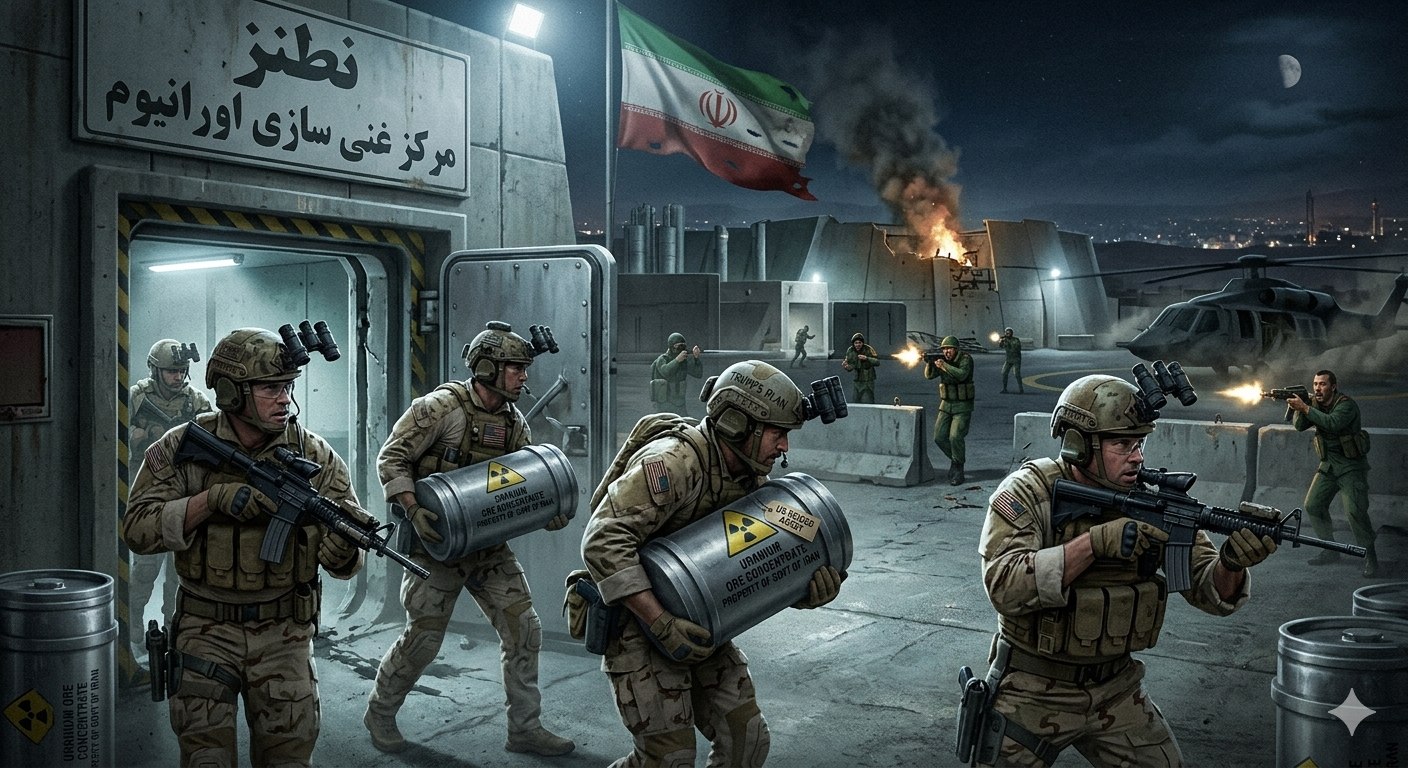
TEHRAN: The month-old US-Israeli campaign against Iran has entered a new phase, with American planners publicly weighing a ground raid to confiscate Tehran’s 400–450 kg stockpile of uranium enriched to 60 %. Iran admits holding the material; Israeli sources claim it is enough for nine nuclear devices once pushed to weapons-grade level.
The Geopolitical Reality
Washington’s calculus is shaped by two irreversible facts: enrichment above 60 % shortens the weaponisation sprint to weeks, and the Islamic Republic has weathered the initial decapitation strikes without regime fracture. Donald Trump has argued that a limited troop insertion now prevents a “much greater bloodshed” later; Tehran, for its part, threatens to levy transit tolls through the Strait of Hormuz and to target any force that attempts seizure.
Regional escalation is already priced in: Israeli officials state that if diplomacy fails, “preventive” strikes on Iran’s electrical grid, desalination plants and oil wells will follow. The Pentagon has reportedly begun targeting the Iranian electricity grid to pressure Tehran into reopening the waterway.
“If not stopped, Iran could produce a nuclear weapon in a very short time—it could be a year, it could be within a few months.”
— Benjamin Netanyahu, Israeli Prime Minister
- Stockpile: 450 kg UF6 at 60 % U-235.
- Break-out timeline: Estimated two-to-four weeks once 90 % enrichment resumes.
- Cost to US: USD 40–50 billion expended in 30 days of operations.
- Hormuz toll: Tehran mulling a per-ship levy; 21 % of seaborne oil transits affected.
Russia’s former president Dmitry Medvedev, still a senior security interlocutor for Vladimir Putin, has warned that Moscow could quietly replenish any confiscated Iranian material, noting Russia keeps “several tons” of 60 % LEU in reserve. The remark underlines the futility of a one-off raid unless paired with a sustained rollback of Iranian know-how.
The View from Delhi
New Delhi’s exposure is twofold: energy and great-power positioning. Any prolonged closure of Hormuz would spike Brent past USD 110/bbl, forcing India either to draw down strategic reserves or accept a widening current-account deficit. Russia’s leverage as a swing supplier has already increased—discounts offered after 2022 have vanished, and spot cargoes now trade at a premium. Indian negotiators must weigh whether to lock in term contracts at higher prices or gamble on a cease-fire.
Strategically, a US ground campaign deep inside the Persian Gulf would tie down American assets for months, reducing Washington’s bandwidth for Indo-Pacific contingencies. For planners in South Block, a protracted US-Iran conflict offers breathing space vis-à-vis immediate great-power pressure, yet raises the long-term risk of a nuclear-armed Iran on the approaches to the Arabian Sea.
Strategic Implications
Three scenarios dominate:
1. Raid succeeds: A temporary non-proliferation win, but Tehran retains enrichment infrastructure and scientific cadre. Within a year clandestine re-enrichment resumes, this time dispersed under mountains and civilian cover. The strategic dilemma returns at higher cost.
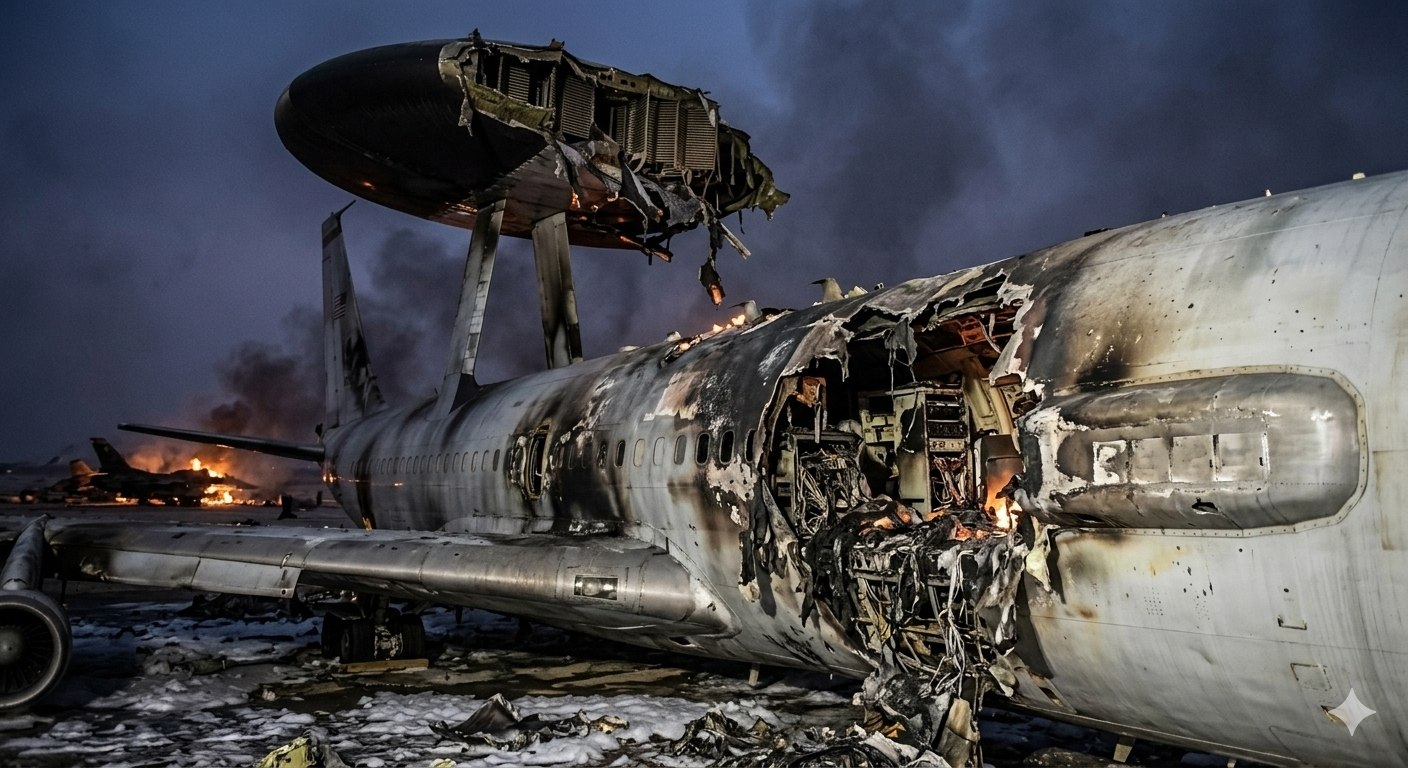
2. Raid fails or is aborted: Domestic pressure in Washington for escalation; Israel calculates that its window for conventional suppression is closing. The next logical step—strikes on Russian-supplied air-defence nodes—risks direct US-Russian fire-contact, a contingency India must monitor for spill-over into Eurasian supply chains.
3. Iran weaponises: If Tehran crosses the 90 % threshold, Israel faces a binary choice: live with a nuclear-armed ideological adversary or execute a pre-emptive nuclear strike. Either outcome collapses the global non-proliferation narrative that underpins India’s own exceptional-status argument on nuclear matters.
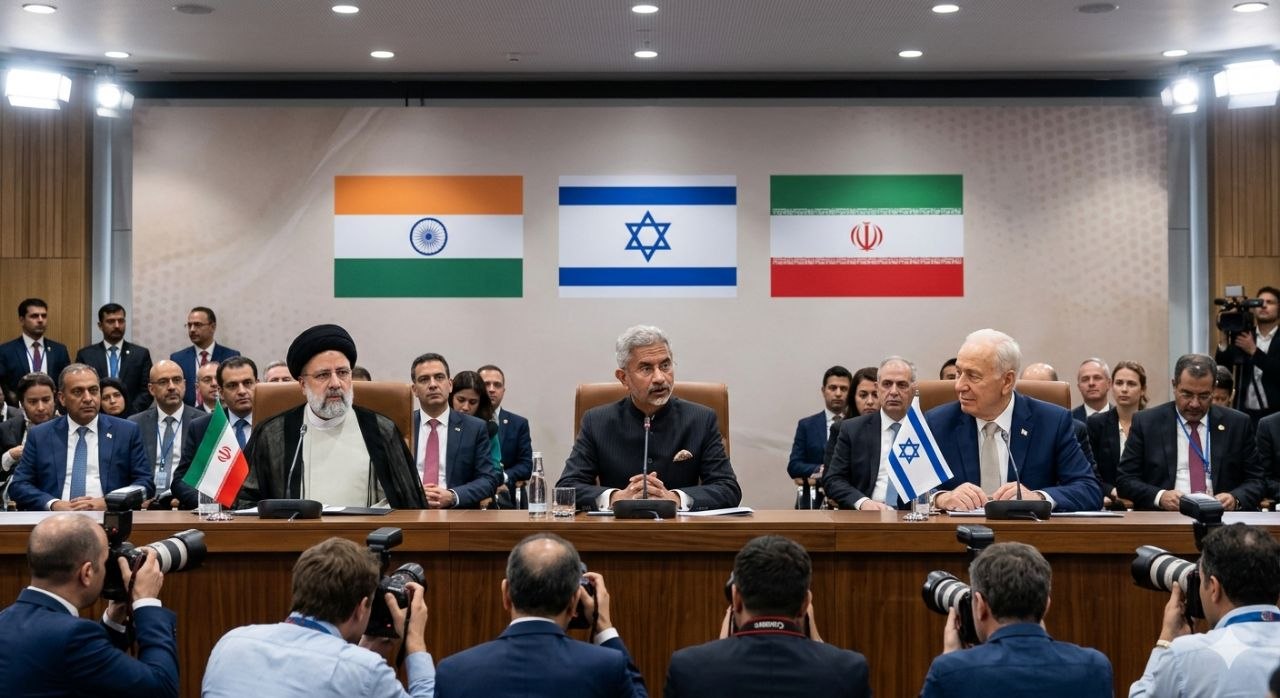
New Delhi therefore has an interest in keeping the Strait open, oil prices stable, and the Non-Proliferation Treaty framework from imploding—without being drawn into the military coalition. The diplomatic tightrope is to counsel restraint in private while abstaining in public, preserving hydrocarbon flows and remittance corridors with all sides.