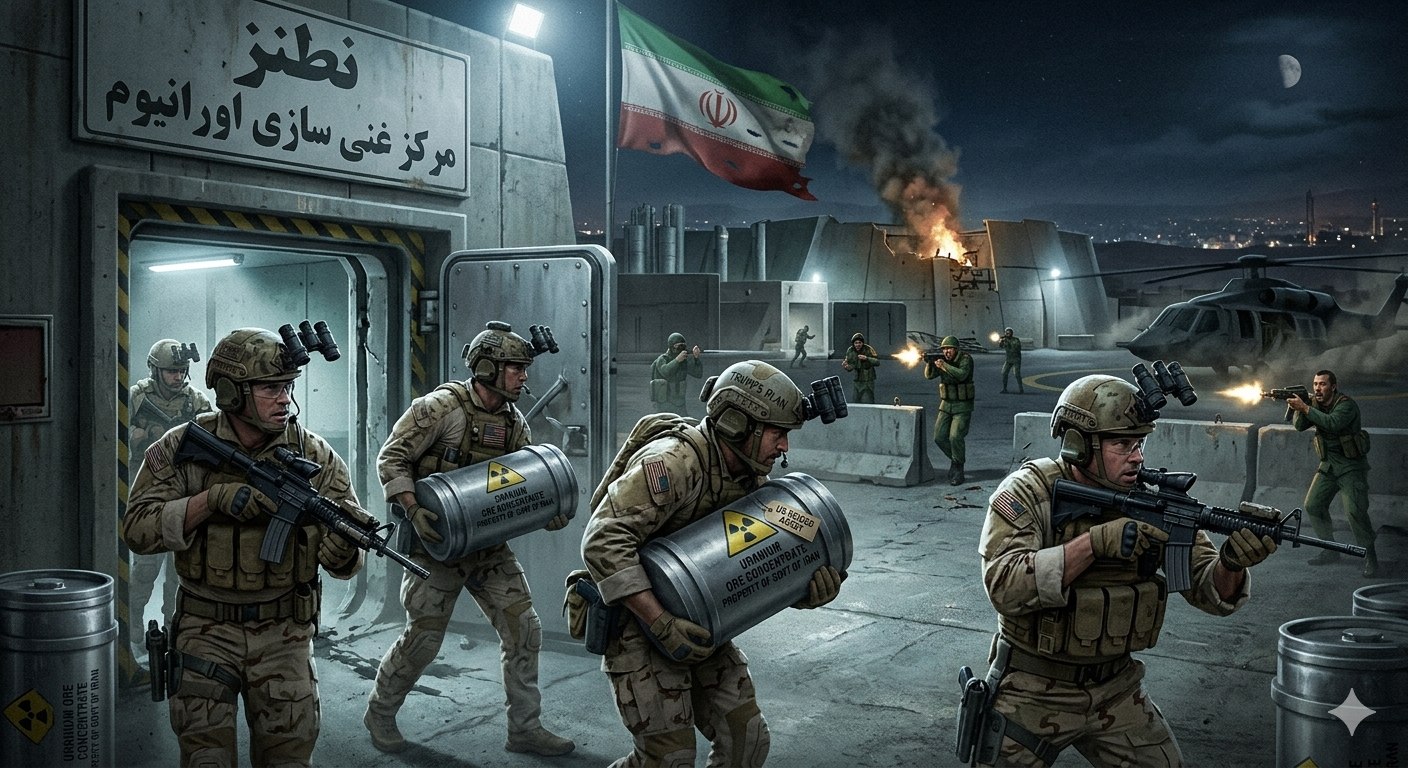
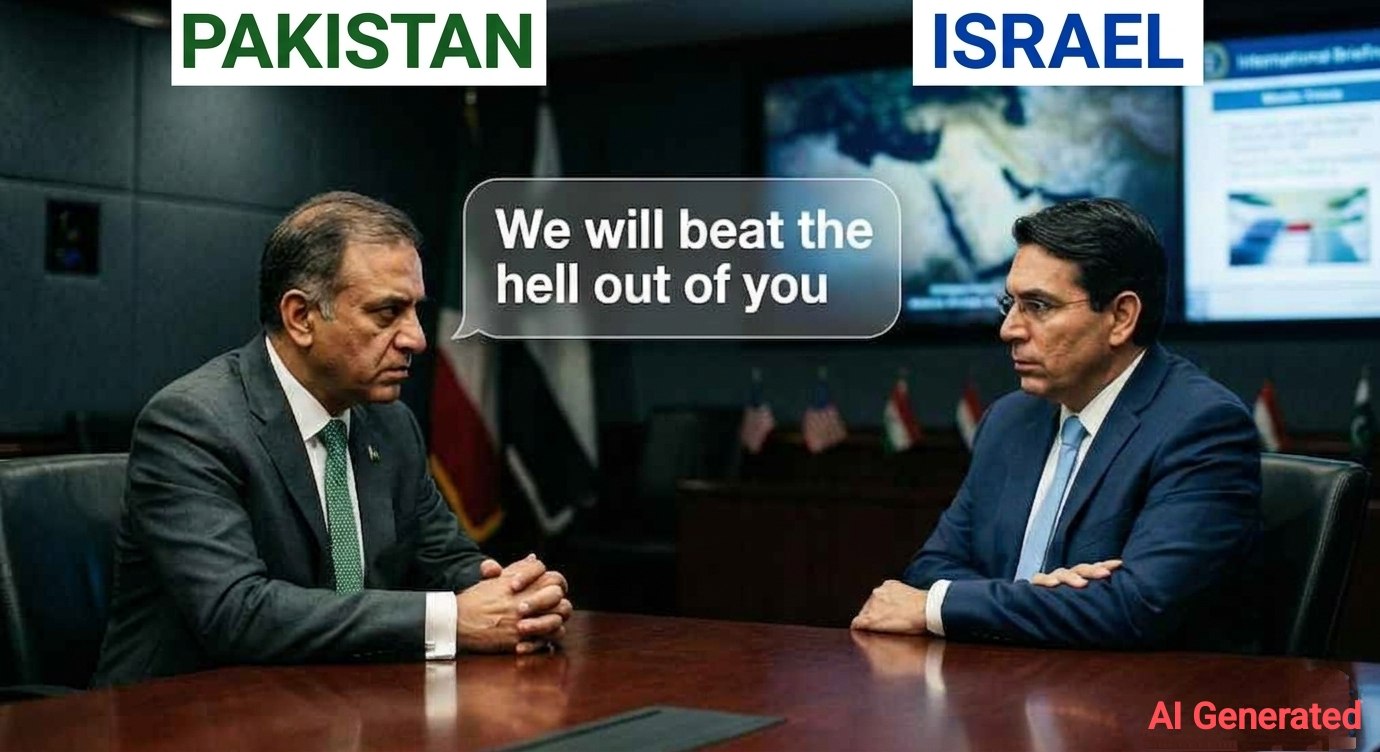
ISLAMABAD: A missile fired during Israel’s ongoing air campaign against Iran landed within metres of Pakistan’s embassy in the diplomatic enclave of Tehran, prompting an official warning from Islamabad that any harm to Pakistani diplomats “anywhere in the world” would be met with force.
The strike, which damaged buildings in the immediate vicinity of the mission, triggered an unusually blunt response from Pakistan’s state-linked think-tank, which told Israel that Pakistan is “no Qatar”—a reference to Doha’s failure to retaliate after Israeli raids on its capital in earlier conflicts.
“We will beat the hell out of them if any harm occurred to our diplomats anywhere in the world.”
— Pakistani government-affiliated think-tank
The Geopolitical Reality
Israel’s aerial offensive against Iran has so far avoided the capital’s diplomatic quarter, home to missions from more than 30 states. The tacit understanding—observed even in the 1980–88 Iran–Iraq war—is that embassies constitute a protected zone. A missile impact inside this perimeter, regardless of intended target, ruptures that norm.
For Israel, the calculus is twofold: degrade Iranian missile infrastructure while signalling that no part of Iran is off-limits. For Tehran, the presence of foreign missions in the same grid square complicates retaliation; striking back risks hitting third-country assets and widening the war.
Pakistan’s entry into the rhetoric underscores how the Gaza–Iran crisis is spilling into South Asian security politics. Islamabad has no defence treaty with Iran, but both states share a 959-km border and coordinate on Baluchistan counter-insurgency. More importantly, Pakistan’s nuclear arsenal and missile reach turn any perceived vulnerability into strategic signalling.
The View from Delhi
New Delhi watches the episode through three lenses. First, embassy security: over 8,000 Indian citizens reside in Iran, and the Chancery is two kilometres from the impact site. Any erosion of the diplomatic sanctuary convention raises force-protection requirements for India’s missions in contested capitals.
Second, nuclear signalling: Pakistan’s quick invocation of its deterrent capacity—explicitly mentioning long-range missiles—reinforces India’s assessment that Islamabad views its strategic arsenal as usable for coercion well beyond the sub-continent. Israeli analysts already label Pakistan’s Shaheen-III and Ababeel programmes as “Iran-range”; Delhi notes the precedent should Pakistan feel encircled.
Third, balance-of-power arithmetic: an Israel–Pakistan confrontation diverts Islamabad’s military bandwidth westward, complicating its two-front calculus against India. Yet it also risks accelerated great-power involvement—Riyadh, Washington, Beijing—on India’s extended periphery, narrowing Delhi’s autonomy to set escalation timelines.
Strategic Implications
Short-term: Expect tighter Indian Navy surveillance of the northern Arabian Sea; Delhi will want early warning if U.S. carrier groups or Israeli submarines transit toward the Gulf, forcing Indian merchant traffic to re-route.
Medium-term: If Israel formally raises Pakistan’s missile programme in multilateral forums—as its officials have privately hinted—Delhi gains diplomatic room to press the FATF and export-control regimes, but also faces pressure to take clearer positions on South Asian nuclear doctrines.
Long-term: A sustained Israel–Pakistan shadow conflict would make the Persian Gulf–Arabian Sea corridor the primary missile-testing theatre. India’s ballistic-missile defence deployments in Gujarat and the Andamans would need recalibration against trajectories designed for the Levant rather than the Hindu Kush.
The diplomatic quarter strike may prove a one-off; the norm it fractures is not. For Indian planners, the episode confirms that the protective bubble around embassies is only as strong as the weakest precision-guided bomb—and that Pakistan’s threshold for nuclear signalling remains strikingly low.