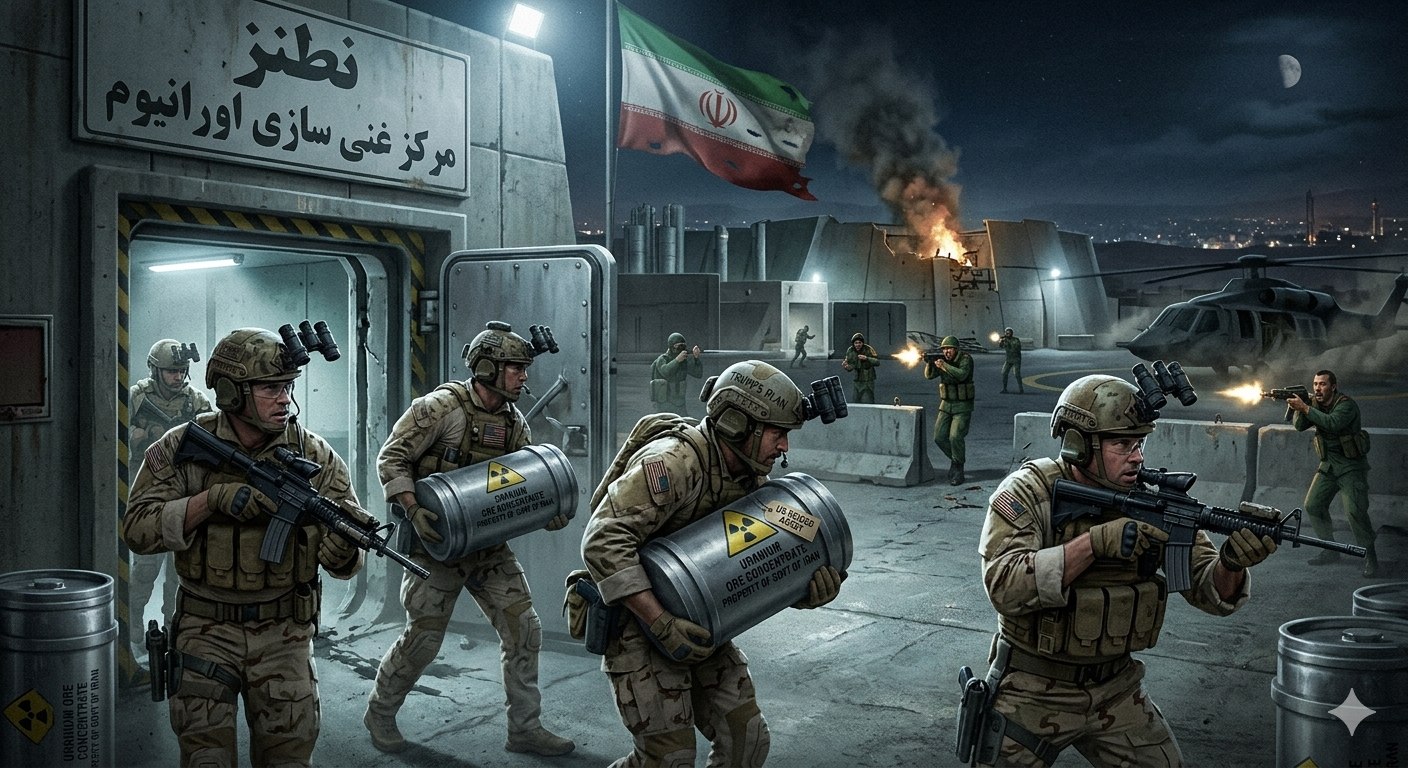
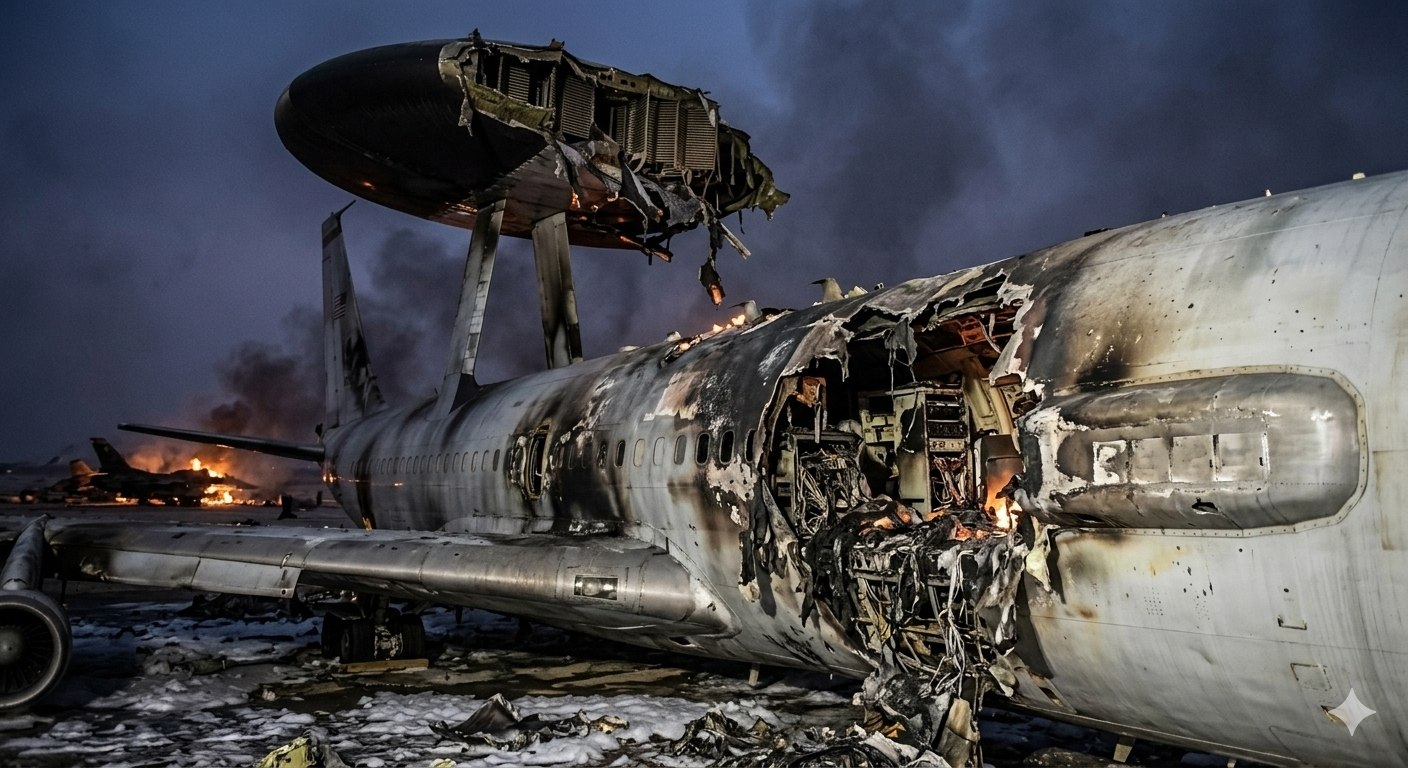
Al-Uyaynah: On 27 March Iran launched saturation missile and drone strikes against Prince Sultan Airbase in central Saudi Arabia, destroying a US Air Force E-3 AWACS, multiple KC-135 refuellers and inflicting an estimated $500–700 million damage in one night. Cumulative attrition across Gulf bases has now crossed the $3 billion mark since hostilities began.
"An E-3 loss on the ground is historically rare; its absence instantly compresses early-warning coverage from the Eastern Mediterranean to the Arabian Sea."
— Western defence official
The Geopolitical Reality
The raid is part of a widening Iran-US air campaign. Tehran is targeting American forward bases in Saudi Arabia, Qatar and the UAE while Washington struggles to replace high-value assets held in theatre.
- E-3 Sentry: One aircraft written off; only 16 remain in USAF service.
- KC-135 Tankers: At least two destroyed, cutting regional strike radius.
- Intelligence Flow: Russia is reportedly providing satellite imagery and geolocation under a clandestine plan code-named Operation Hidden Hand.
With US stocks of replacement air-frames limited and Boeing’s newer E-7 yet to be fielded, the loss reduces America’s ability to manage a two-theatre air war. The leaked satellite pictures—first circulated online—have also dented Washington’s perceived omniscience inside the Gulf monarchies.
The View from Delhi
New Delhi has no direct stake in the US-Iran contest, but the erosion of American air dominance reshapes the security marketplace from which India buys much of its hardware. A protracted US commitment in Iran would siphon surveillance platforms, tankers and strategic attention away from the Indo-Pacific, indirectly raising China’s margin for manoeuvre along the Line of Actual Control.
Oil-price volatility is the nearer headache. Every $10 rise in Brent adds roughly $12 billion to India’s annual import bill; the futures curve already prices in a war premium. Delhi will have to balance its Iranian crude discount—vital for refiners geared to sour grades—against Washington’s CAATSA waiver politics.
Strategic Implications
If ground operations follow and US forces suffer prisoners or heavy casualties, domestic pressure could force the reintroduction of selective conscription. A draft-driven US economy would divert capital from tech to defence, accelerate inflation and depress equity markets—an external demand shock for India’s service exports.
Meanwhile, Russia’s intelligence largesse to Iran widens the Moscow-Tehran axis; should India require spare parts or missile defence cooperation from either capital, bargaining hard-currency leverage will shrink. Finally, any disruption of the Hormuz chokepoint places up to 65% of India’s petroleum imports at risk, reviving the insurance and freight spikes last seen during the 2019 tanker crisis.