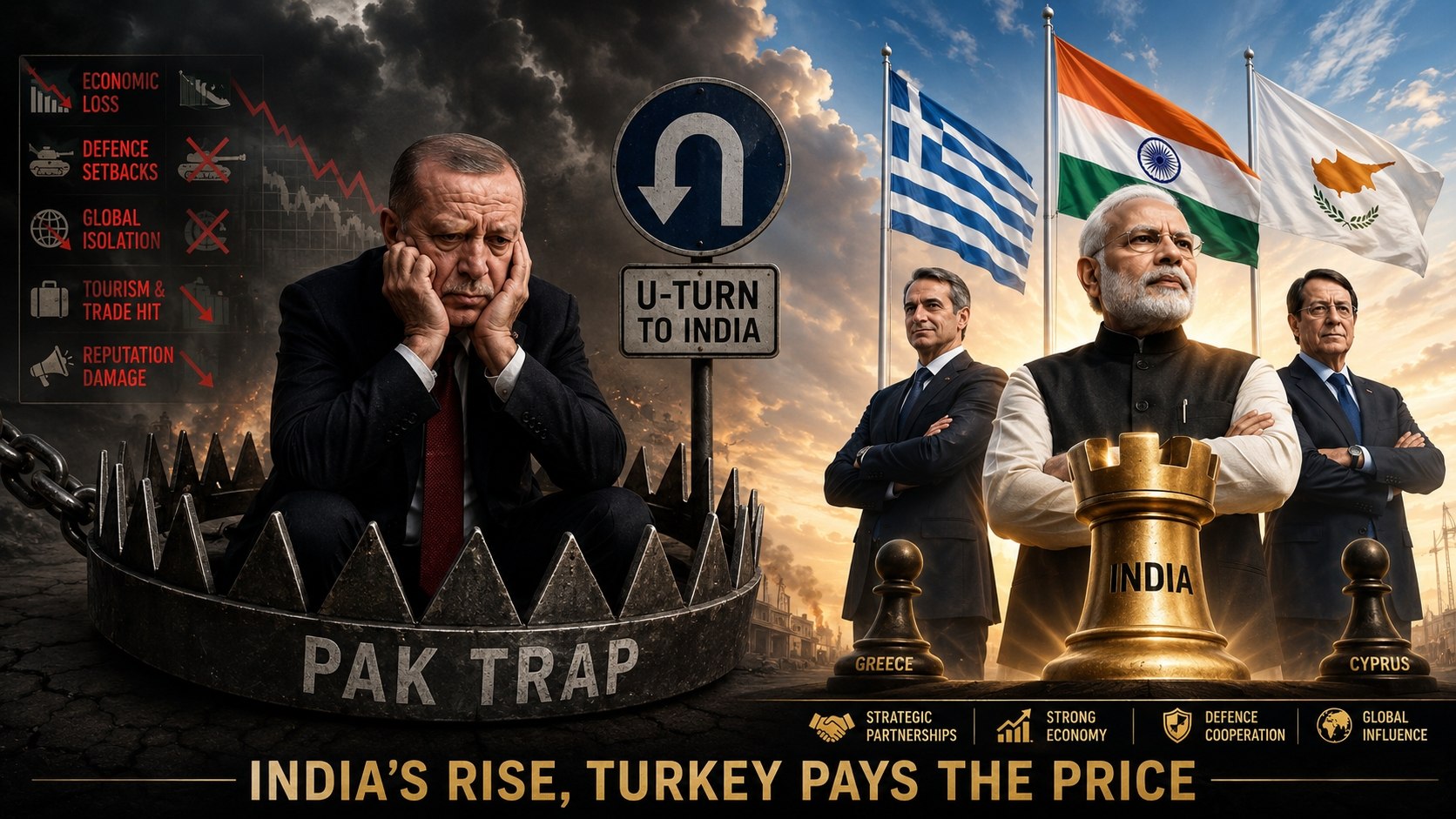
ANKARA: Turkey has successfully test-fired its first homegrown long-range ballistic missile, placing itself among a limited group of nations with indigenous strategic weapons capability. The missile, with a reported range of 6000 kilometers, marks a significant milestone in Ankara's defense industrialization.
The Geopolitical Reality
Ankara's missile test represents more than a weapons achievement. It signals Turkey's determination to establish itself as a regional power with independent strategic reach. The capability places Turkish military assets within striking distance of multiple theaters, including the Eastern Mediterranean, parts of Europe, and South Asia.
Turkey has demonstrated consistent support for Pakistan on the Kashmir question at international forums, including the United Nations. This positions Ankara alongside Islamabad on an issue that remains central to India-Pakistan tensions. Turkish drones have seen operational use in conflicts involving Pakistani military interests, further cementing the defense relationship.
The broader pattern suggests Turkey is pursuing an assertive regional role that extends beyond traditional NATO commitments. Ankara has also engaged with the Organization of Islamic Cooperation on matters affecting Muslim-majority nations, frequently supporting positions critical of Indian policies on Kashmir.
The View from Delhi
For Indian strategists, the Turkish missile development introduces additional complexity in regional security calculations. The convergence of Turkish strategic capabilities with Pakistani defense cooperation warrants careful monitoring. New Delhi must assess whether this capability could be transferred or integrated into Pakistani military planning.
The diplomatic dimension requires equal attention. Turkey's persistent raising of Kashmir at multilateral forums represents a consistent pattern of opposition to Indian positions. While other major Muslim-majority nations have refrained from such active support for Pakistan, Ankara has maintained this stance across multiple administrations.
Trade relationships between India and Turkey remain functional, with bilateral commerce continuing despite political differences. However, the trajectory of diplomatic engagement suggests limited scope for improvement absent significant policy shifts from Ankara.
Strategic Implications
The convergence of Turkish strategic capabilities and anti-Indian diplomatic positions creates a multidimensional challenge for Indian foreign policy. Several considerations emerge:
- Defense Cooperation: The potential for technology transfer to Pakistan requires assessment of India's own strategic vulnerabilities and defensive preparations.
- Multilateral Forums: Turkey's active role in OIC and UN contexts complicates India's diplomatic efforts on Kashmir.
- Regional Alliances: The emergence of what some analysts term an "Islamic NATO" concept involving Turkey, Pakistan, and Saudi Arabia introduces new alliance dynamics.
- Cyprus Factor: India's potential defense cooperation with Cyprus, including BrahMos missile systems, directly affects Turkish interests and could escalate regional tensions.
"The question for New Delhi is whether Turkey's strategic trajectory represents a permanent shift or a contingent policy that could change with altered leadership configurations."
— Strategic Analysis
India's options remain constrained by Turkey's current policy direction. The relationship requires balancing continued commercial engagement against diplomatic vigilance regarding potential security implications. Without a fundamental change in Ankara's approach to Kashmir and Pakistan, significant improvement in bilateral relations appears unlikely.