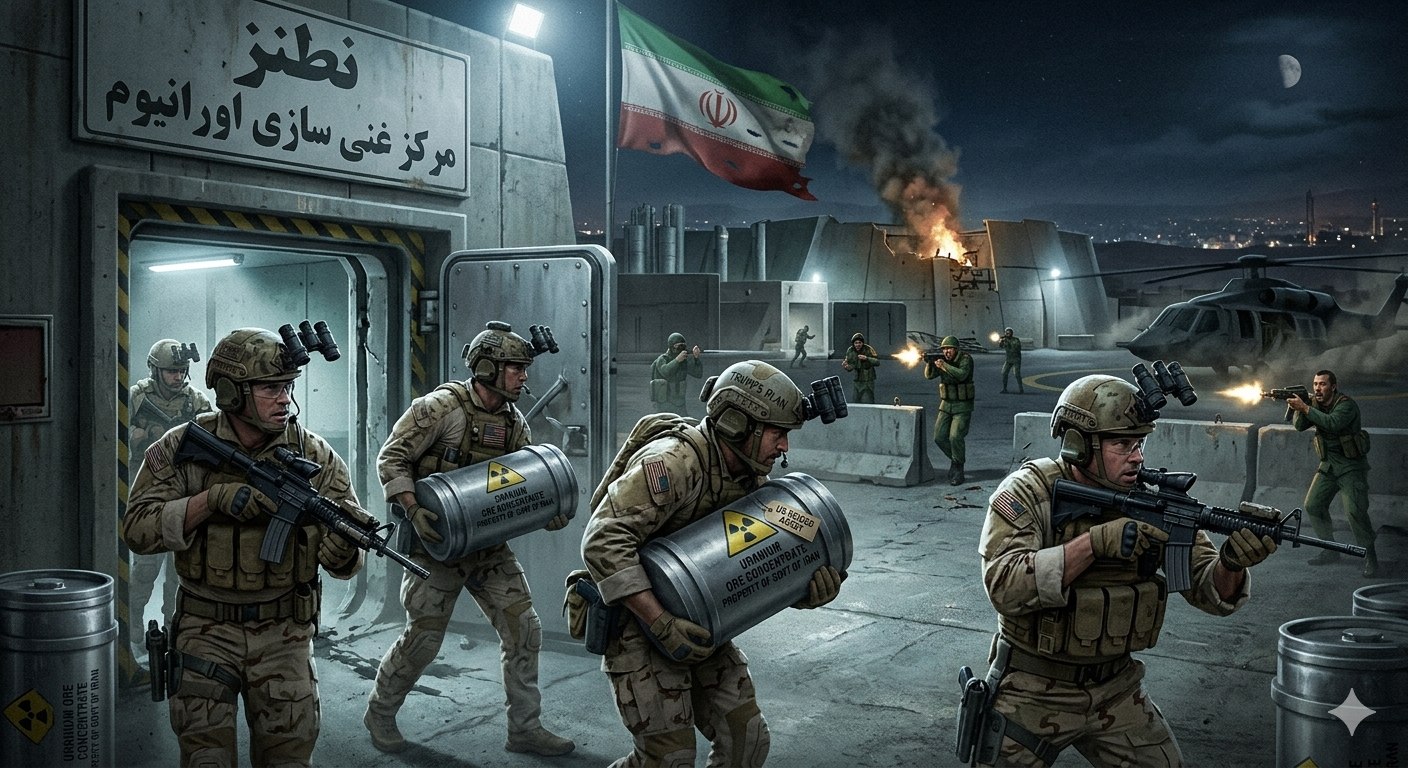
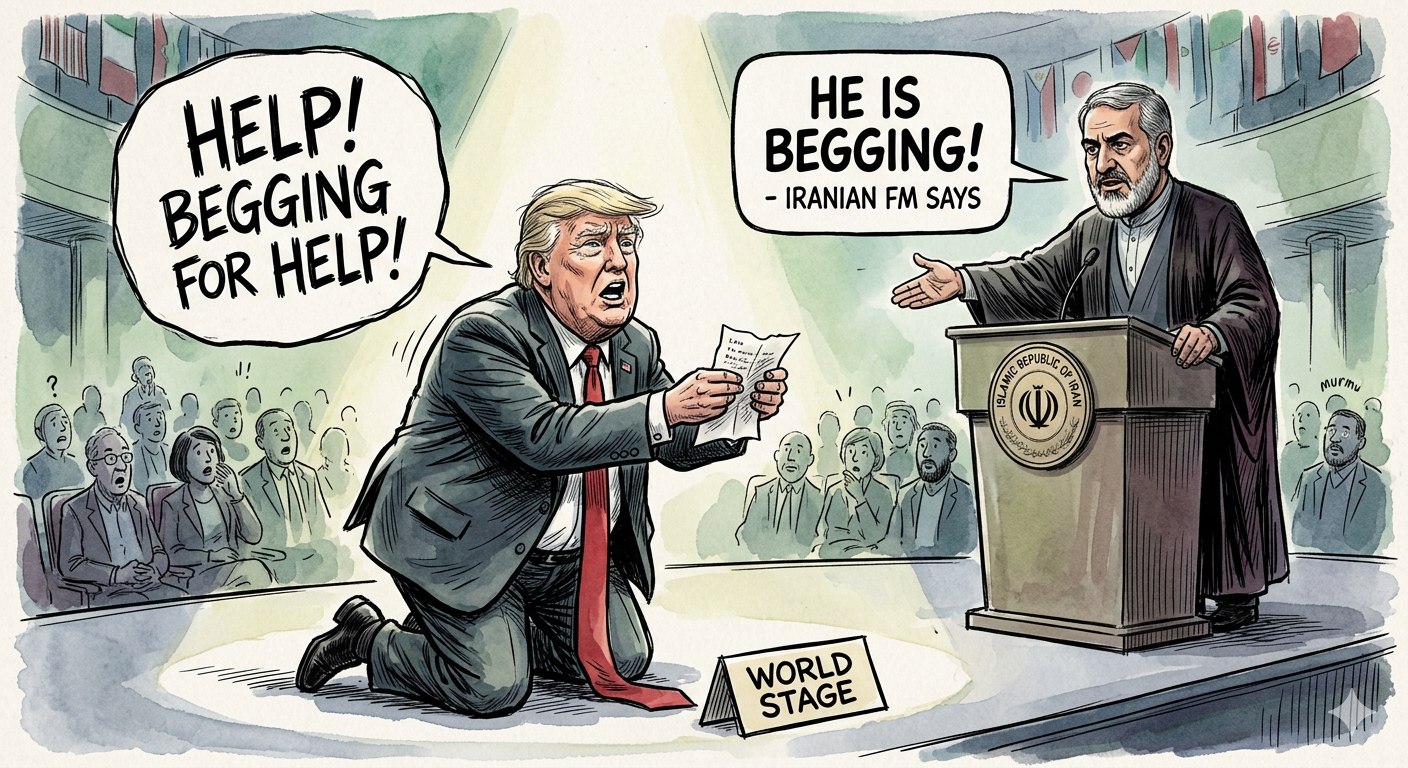
Washington: President Donald Trump publicly invited extra-regional navies to join the United States in securing the Strait of Hormuz, saying America “will help a lot” but needs partners to keep the waterway open for oil traffic. Iran’s foreign minister responded by dismissing the appeal as evidence that the US security umbrella is “full of holes” and urged nearby Muslim states to expel “foreign aggressors.”
The Geopolitical Reality
The Strait of Hormuz carries roughly one-fifth of global seaborne oil. Any sustained closure pushes benchmark crude toward the politically toxic $200/barrel mark inside the US election cycle.
Washington’s request is framed as burden-sharing, yet it coincides with:
- Iran’s first-ever dance-scene release of a 2,000-km Sejil-2 two-stage solid-fuel missile, telegraphing survivable second-strike options.
- US redeployment of additional air-defence batteries from Japan and South Korea to the Gulf.
- European hesitation; no automatic NATO follow-on force has been pledged.
"The military execution has been strong, but the absence of a coherent political strategy governing the strikes is already being criticised."
— Jennifer Cafarella, Institute for the Study of War
China and Russia have confined themselves to rhetoric, but both hold observer stakes: Beijing imports 40 % of its crude via Hormuz; Moscow eyes another theatre to stretch US assets.
The View from Delhi
India’s crude imports from the Gulf have crossed 60 % of total consumption; any risk premium feeds directly into the rupee-denominated import bill and widens the current-account deficit.
New Delhi has historically kept its naval presence in the Gulf limited to anti-piracy patrols, avoiding alignment with US-led coalitions. A formal entry now would:
- Compromise India’s cordial ties with Tehran, needed for transit rights to Afghanistan and Central Asia.
- Expose Indian-flagged tankers to Iranian retaliation without assured US escort.
- Complicate the Chabahar port project, India’s logistical hedge against Chinese control of Gwadar.
Yet refusal carries costs. If Hormuz traffic is throttled, India’s strategic petroleum reserve covers only 9.5 days of net imports, leaving the economy hostage to price shocks.
The safest path is quiet coordination with like-minded Asian consumers—Japan, South Korea—to keep commercial shipping lanes open under a commercial rather than military banner, preserving strategic autonomy while signalling stakeholder responsibility.
Strategic Implications
Scenario 1 – Limited Escalation: Iran continues harassing tankers with mines and drones; Brent hovers near $110. India accelerates Russian crude purchases at discounted prices, cushioning fiscal pressure but inviting secondary US sanctions scrutiny.
Scenario 2 – Protracted Blockade: Tehran sinks a flagged vessel; US–UK–French navies escort convoys. India is asked to contribute a destroyer. Rejection risks G7 coordination against Indian service exports as leverage.
Scenario 3 – Regional War: Israeli strikes on Iranian ports provoke missile retaliation toward Saudi and UAE processing hubs. Insurance premiums quadruple; India’s import bill spikes $45 bn annually, erasing the dividend from record services exports.
The core uncertainty is whether Washington has a political end-state or is merely improvising to avoid a pre-election oil spike. Without a diplomatic off-ramp, kinetic containment drags on, eroding US deterrent credibility—an outcome China can quietly exploit elsewhere along the LAC.
New Delhi’s leverage lies in its non-blockading naval profile and historical goodwill on both shores of the Gulf. Offering neutral, multilateral convoy coordination under IMO cover may keep Hormuz open without forcing India to choose camps.