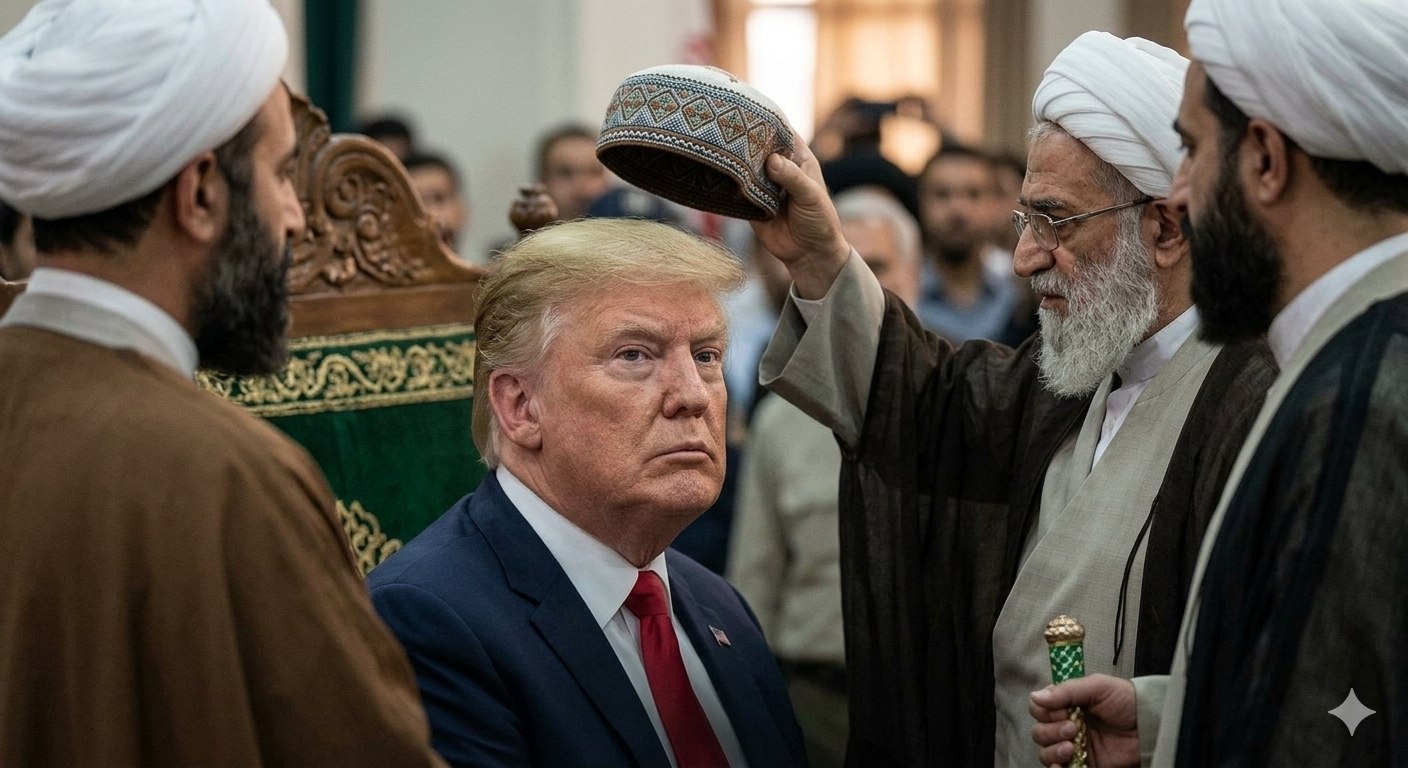
WASHINGTON: Donald Trump told supporters that Iranian interlocutors recently asked him to assume the post of Supreme Leader, a claim that has since circulated through global media. In the same remarks he repeated an earlier assertion that, according to the CIA, Iran’s current Supreme Leader is gay—an allegation that, if amplified, could undermine the clerical establishment inside a country where same-sex relations carry the death penalty. Tehran has not issued an official response to either statement.
The Geopolitical Reality
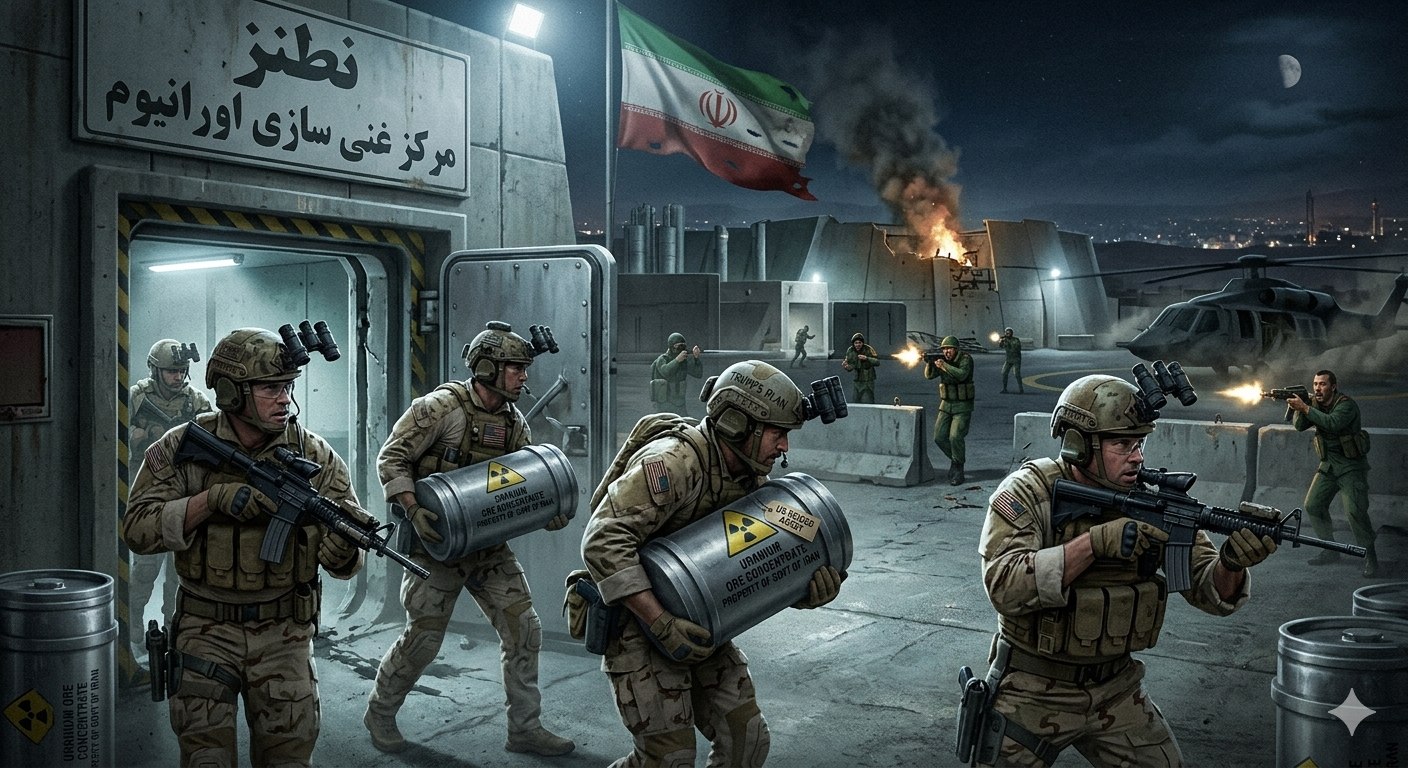
The Islamic Republic faces two external pressures simultaneously: the threat of a U.S.–Israeli preventive strike on its nuclear facilities and an information campaign designed to delegitimise the clerical elite. Washington has moved additional naval assets, including uncrewed surface vessels, into the Persian Gulf, and U.S. officials have briefed regional partners on contingency plans to seize the Iranian-held Khark Island—site of strategic oil storage.
Inside Iran, hard-line commentators are using the spectre of an imminent American landing to argue that the only reliable deterrent is a tested nuclear device. Parliamentarians close to the Revolutionary Guard have revived the slogan “Nuclear latency is no longer enough,” arguing that a demonstrated warhead would halt further U.S. or Israeli strikes. North Korea’s open reminder that it already possesses nuclear weapons is being cited in Tehran policy circles as evidence that atomic capability buys strategic space.
The View from Delhi
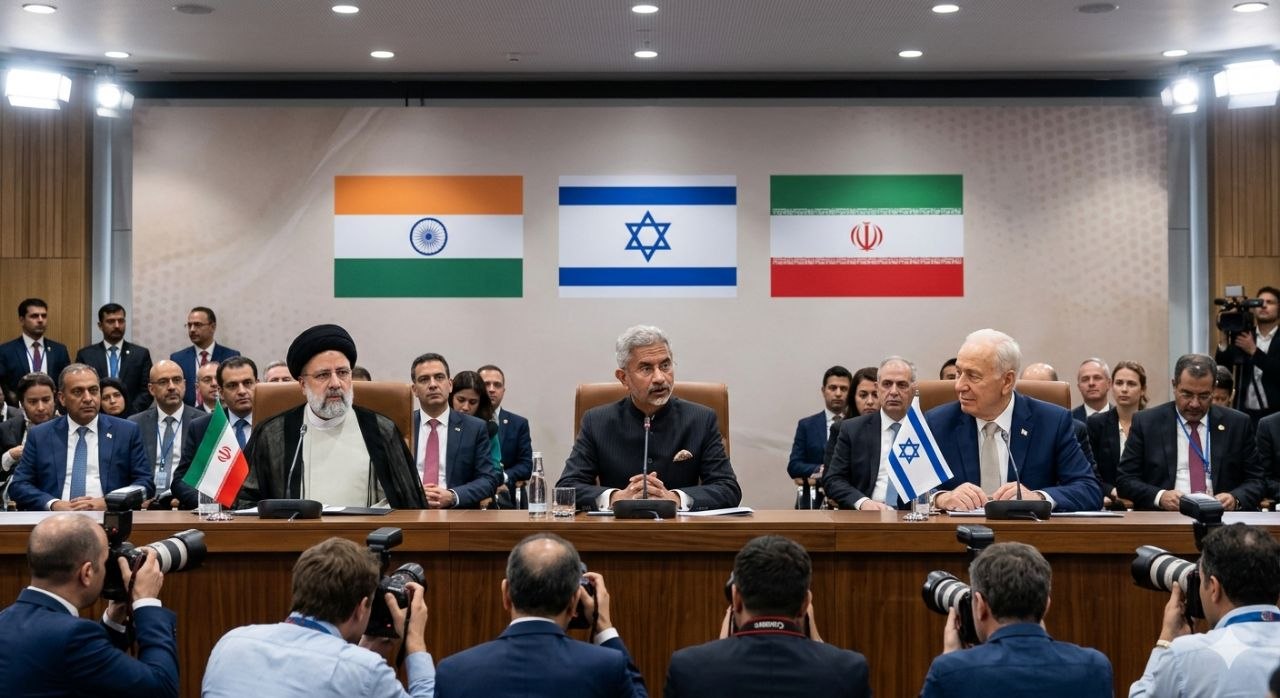
For Indian planners, the episode highlights how narrative warfare is becoming a parallel theatre to kinetic force. Delhi has long balanced its Iran ties—energy imports, Chabahar port, and a shared interest in Afghanistan—with the need to preserve growing security links to Washington and Tel Aviv. A U.S.–Iran confrontation that begins with information operations but slides into strikes on Iranian islands would send insurance premiums soaring and could temporarily choke Hormuz-bound traffic, raising India’s import bill.
More importantly, any American seizure of Khark would be read in Delhi as a precedent for extra-territorial control of hydrocarbon infrastructure—something India, as the world’s third-largest oil consumer, cannot ignore. The prospect of an Iranian nuclear test, meanwhile, would place New Delhi in a diplomatic vise: India opposes new proliferators on principle, yet it values Tehran’s role in stabilising Afghanistan and providing basaltic access to Central Asia.
Strategic Implications
Trump’s rhetorical gambits, whether accurate or apocryphal, signal that psychological pressure will remain a favoured instrument of U.S. statecraft regardless of who occupies the White House. For Iran, the lesson is that its leadership’s legitimacy can now be attacked on social rather than purely ideological terrain—raising the domestic cost of any compromise with Washington.
India must therefore prepare for three contingencies: a limited U.S. strike that spikes crude prices, an Iranian dash to nuclear testing that fractures the global non-proliferation consensus, and a prolonged shadow war in the Gulf that forces Indian warships to escort commercial traffic. Each scenario carries immediate economic consequences and long-term diplomatic choices Delhi would prefer to postpone.
“When great powers weaponise social stigma, the battlefield shifts from missiles to memes—and the casualties include the neutral states that rely on stable energy flows.”
— WFI Editorial Board