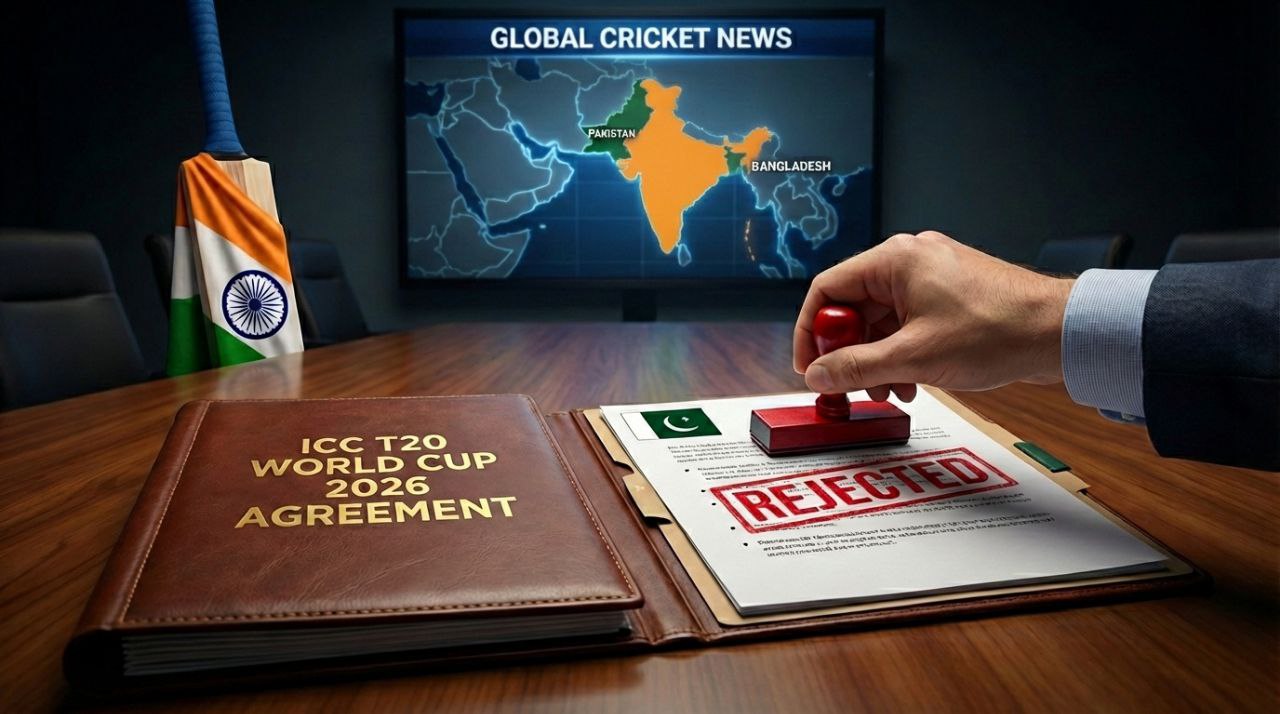
New York: Pakistan’s government late Thursday cleared its cricket team to face India in the T20 World Cup on 15 February, reversing a public boycott threat that lasted seven days. The climb-down followed intense lobbying by the ICC, Sri Lanka and Bangladesh after Islamabad tried to condition its participation on concessions for Bangladesh, which had been dropped for refusing to play in India.
The Geopolitical Reality
The episode exposed how cricket administration in South Asia operates as an extension of foreign policy. Pakistan initially framed its stance as solidarity with Bangladesh, yet Dhaka itself asked Islamabad to play, fearing revenue loss if the marquee fixture collapsed.
- Bangladesh exit: Removed for demanding neutral venues after IPL dropped one of its players.
- Replacement: Scotland entered the 20-team draw.
- ICC pressure: Unilateral withdrawal would breach tournament regulations and trigger sanctions.
Chairman Mohsin Naqvi floated five conditions for Pakistan’s participation; three were rejected outright and two received non-committal responses. The demands included:
- No financial penalty for Bangladesh.
- A future U-19 World Cup hosted in Bangladesh.
- India–Pakistan bilateral series, tri-nation series with Bangladesh, and an India tour of Bangladesh in 2026.
“The conditions were outside ICC jurisdiction; member boards arrange bilateral tours.”
— ICC representative
The View from Delhi
For Indian planners, the incident confirms that cricket diplomacy remains a volatile lever in regional politics. New Delhi stayed silent throughout, letting commercial gravity and ICC rules work. The BCCI’s financial weight—amplified by Jay Shah’s ICC presidency—meant pressure filtered through smaller boards rather than direct confrontation.
New Delhi will read three cues:
- Pakistan’s need for global cricketing legitimacy outweighs domestic posturing.
- Bangladesh values ICC revenue over symbolic solidarity.
- ICC regulations, when backed by India’s market power, can constrain boycott politics.
Strategic Implications
The reversal underscores the asymmetry of cricketing power: Pakistan needs ICC events more than the ICC needs Pakistan. Future threats face higher credibility costs, while India retains institutional leverage without public escalation.
Risks ahead:
- Recurring attempts to link bilateral grievances to multilateral fixtures.
- Potential for smaller boards to game the format knowing India–Pakistan fixtures are non-negotiable.
- Domestic backlash in Pakistan may force sharper U-turns, complicating consistent messaging.
The 15 February match will proceed, but the episode signals that geopolitics will keep intruding on the pitch—usually to India’s structural advantage.