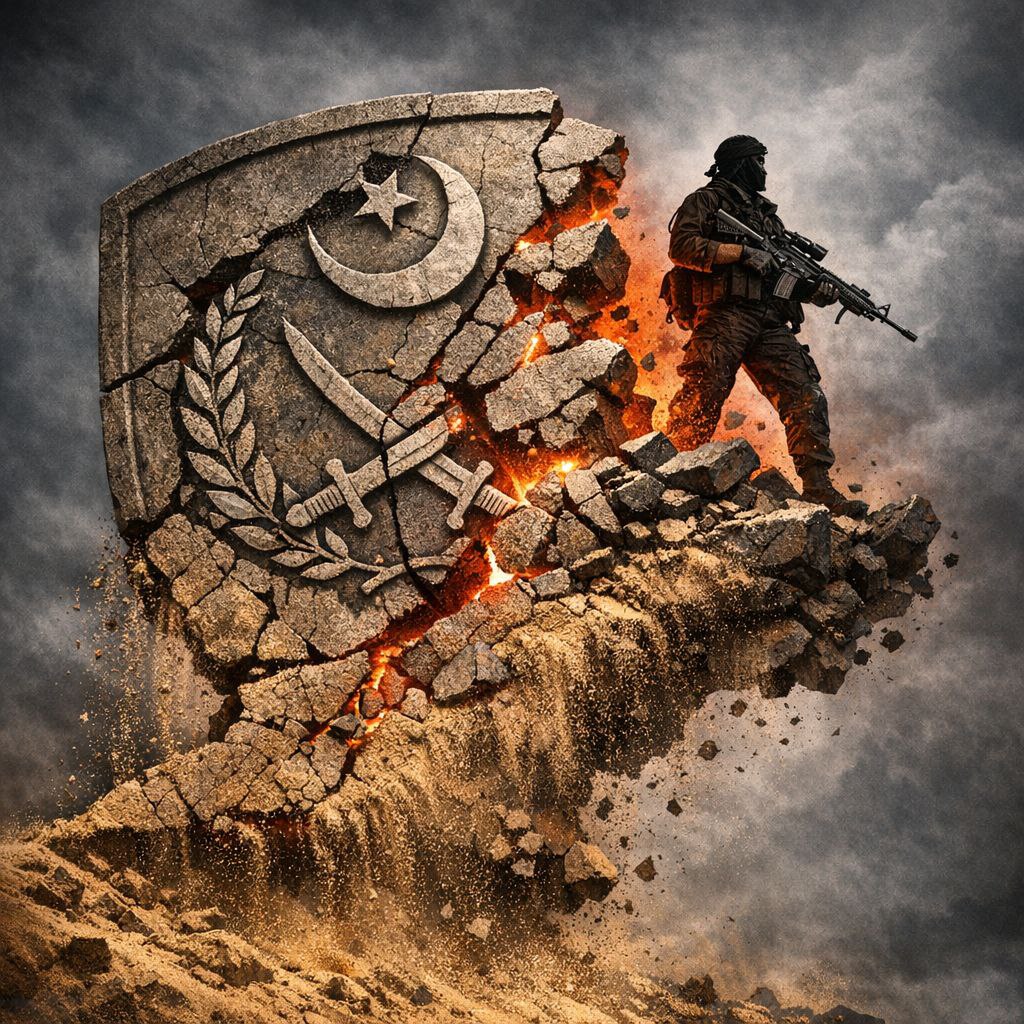
Islamabad, Pakistan: In an unprecedented admission, Pakistan's Defence Minister Khawaja Asif told parliament that the country's security apparatus is "physically handicapped" in Balochistan, a frank concession that Islamabad is fast losing operational control over the resource-rich province that comprises 44 percent of national territory.
Strategic Implications
Asif's statement, delivered before the National Assembly, marks a watershed moment: a serving Pakistani defence minister publicly questioning the military's ability to dominate its own terrain. Analysts interpret the remark as tacit recognition that insurgents—not the state—now enjoy freedom of movement across vast swathes of Balochistan, raising immediate alarm over the security of the China-Pakistan Economic Corridor (CPEC) whose flagship Gwadar port sits on the province's Arabian Sea coast.
Background
Balochistan has simmered since 1947, marginalised by a Punjabi-dominated federation that extracts the province's gas, copper and gold while leaving its 12 million inhabitants mired in poverty. Sparsely populated, rugged and twice the size of Britain, the region is ideal guerrilla terrain. The Balochistan Liberation Army (BLA)—designated terrorist by Pakistan—has escalated attacks, culminating last month in "Operation Hair Storm" that simultaneously struck a dozen targets, introduced female suicide bombers and reportedly killed 200 Pakistani personnel, though independent verification is impossible due to media curbs.
Expert Analysis
Western military attaches see Asif's comment as confirmation that Pakistan's conventional superiority—tanks, fighter jets and 200,000-plus troops—cannot offset poor intelligence, abysmal logistics and an adversary wielding million-dollar thermal-rifles and night-vision gear. With the BLA reportedly possessing more advanced weaponry than regular army units, the conflict has shifted from low-intensity harassment to a cost-intensive technology race that Islamabad is currently losing.
Looking Ahead
The admission erodes the army's carefully cultivated narrative of total control and may embolden separatists to seek political recognition abroad. While no immediate territorial secession is forecast, the province is drifting toward a de-facto strategic stalemate: Pakistan retains legal sovereignty but cedes day-to-day authority in rural and tribal zones, complicating Beijing's plans for industrial parks, energy pipelines and a naval foothold at Gwadar.