Kuala Lumpur: Prime Minister Narendra Modi concluded a two-day visit to Malaysia on 19 March, signing 16 bilateral outcomes that convert the 2024 India-Malaysia Comprehensive Strategic Partnership into implementable projects. The agreements span six pillars: digital economy, defence, semiconductors, labour, health and disaster management, and cultural diplomacy.
“There should be no double standards in tackling terrorism.”
— Prime Minister Narendra Modi, joint statement with Malaysian PM Anwar Ibrahim
The Geopolitical Reality
Malaysia sits athwart the Malacca Strait, through which 40 % of India’s energy imports transit. Kuala Lumpur is also India’s third-largest partner inside ASEAN after Singapore and Vietnam, and hosts a 2.7 million-strong ethnic-Indian diaspora, mostly Tamil.
After a decade of intermittent friction over Kashmir and Pakistan-centric rhetoric, the Anwar Ibrahim government—in office since November 2022—has adopted a neutralist posture towards both India and China. Washington and Beijing are courting Kuala Lumpur for semiconductor facilities; India is offering market depth and a democratic hedge.
- Malacca chokepoint: 80,000 vessels/year; India’s crude from Africa & Gulf transits here.
- ASEAN gateway: Malaysia chairs ASEAN in 2025; Delhi needs consensus for Indo-Pacific language.
- China-plus-one: Malaysia is a key node in non-Chinese chip supply chains.
The View from Delhi
For Indian planners, the visit locks Malaysia into three overlapping nets: economic (digital rupee corridors, chip testing), security (maritime domain awareness, terror-finance watchdogs) and constituency (diaspora welfare, cultural centres). Each net is designed to raise the political cost for any future Malaysian regime that reverts to Kashmir activism.
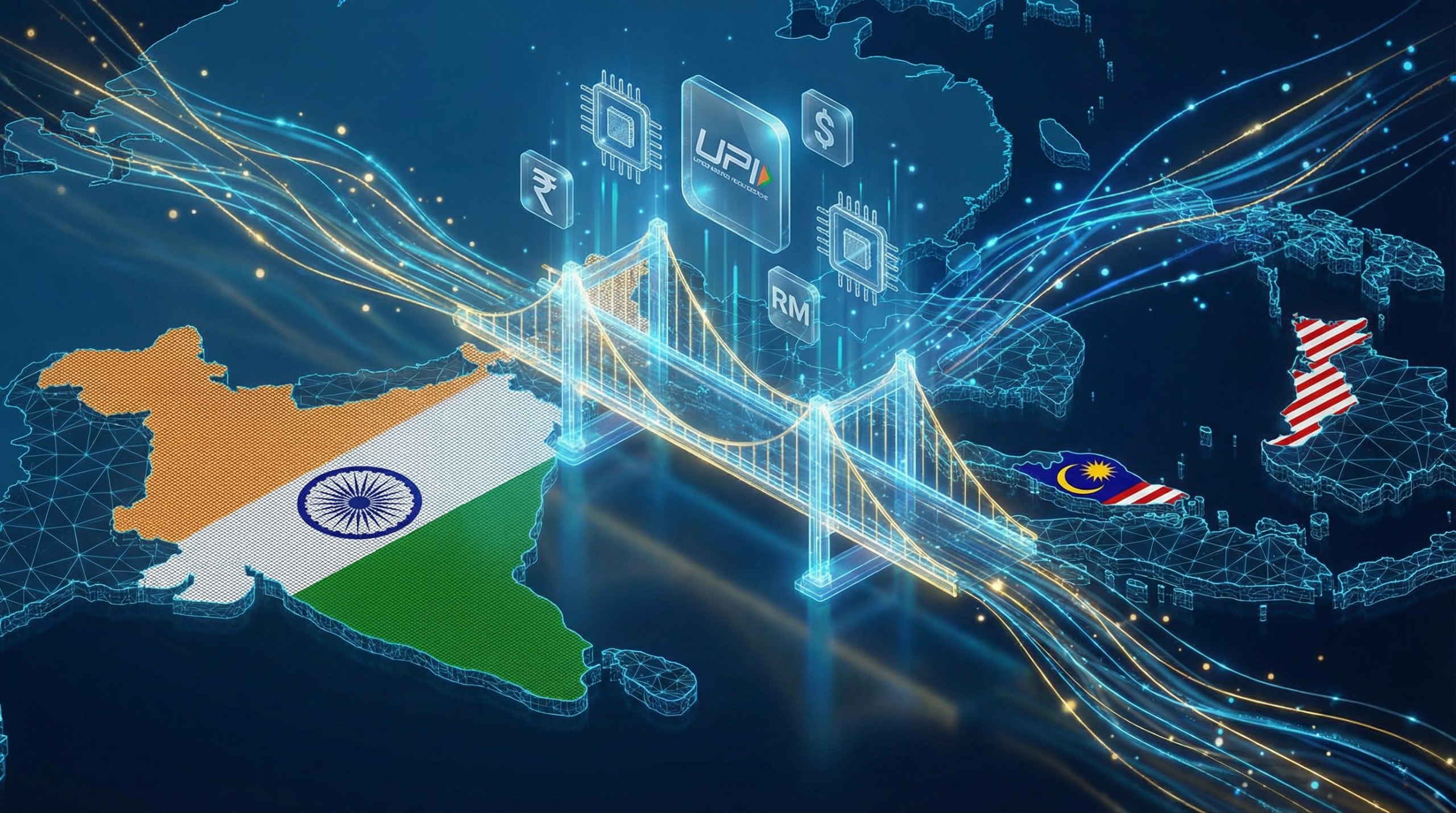
The UPI-DuitNow linkage is the first outside South Asia; it quietly pushes India’s digital public infrastructure as a Western-alternative rails, usable by Indian tourists and students without SWIFT fees. On semiconductors, Malaysia’s dominance in assembly-test-pack gives India a back-end partner whose facilities can qualify for US CHIPS Act friend-shoring once Indian fabs begin front-end wafer fabrication.
Counter-terror language in the joint statement is sharper than usual: “no selective condemnation” is Delhi’s way of reminding Kuala Lumpur that past silence on cross-border incidents carries opportunity costs in trade and technology access.
Strategic Implications
Short-term: A new Indian consulate in Penang—Malaysia’s electronics cluster—will double as a semiconductor listening post for supply-chain intelligence. CBI-ACCM anti-graft cooperation could expose hawala nodes that route funds from Southeast Asia to Kashmir and the Gulf.
Medium-term: Malaysia’s 2025 ASEAN chair gives India a swing state when South China Sea language is negotiated; Delhi will press for UNCLOS-based phrasing that complicates Beijing’s claims. The CEO Forum report due late-2025 will indicate whether Indian capital can break the Singapore-centric hub syndrome in Southeast Asia.
Long-term: Success hinges on domestic politics in both countries. Anwar’s coalition includes Islamist MPs who have historically backed Pakistan; India’s own Tamil Nadu parties monitor diaspora welfare rhetoric. If either side perceives symbolic slights, the 16 outcomes could stall, leaving the partnership comprehensive on paper, tactical in practice.