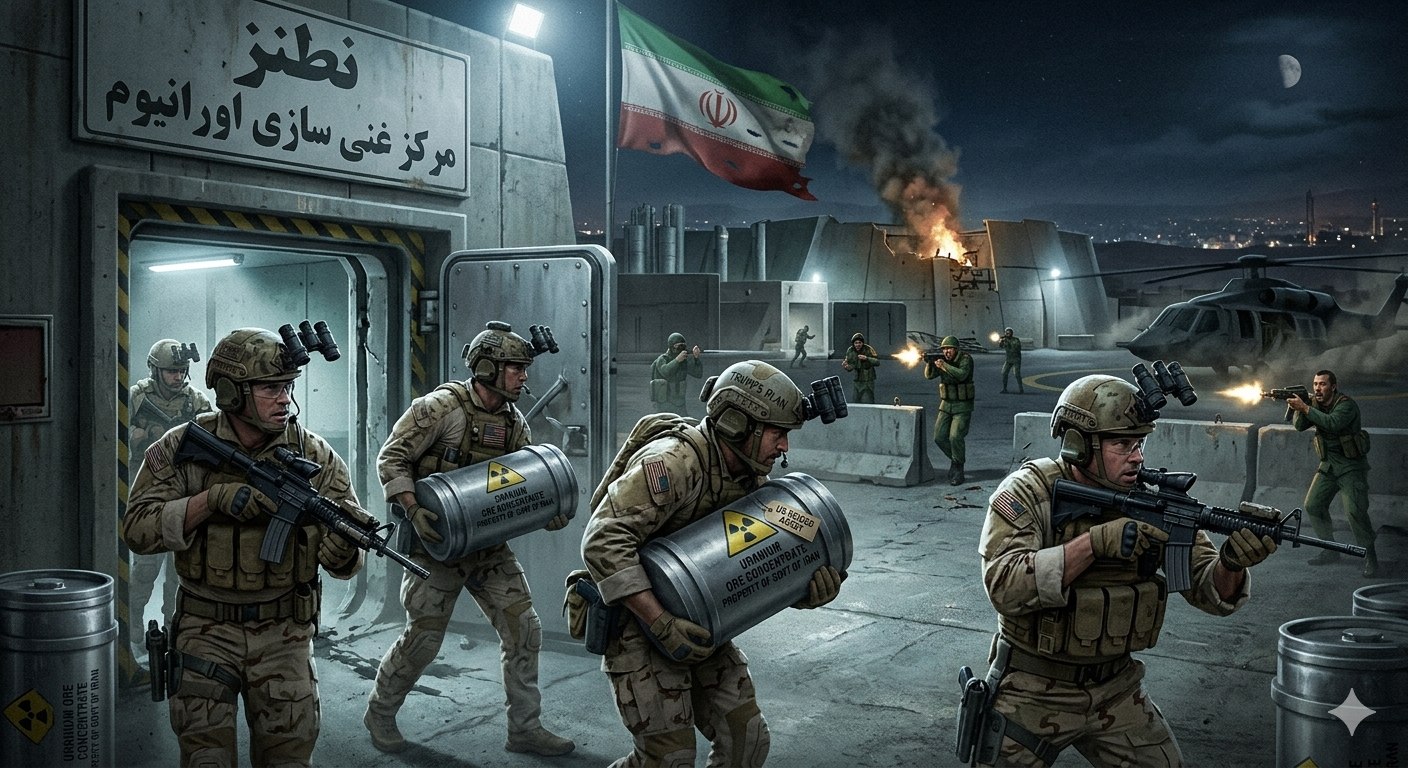
New Delhi: A dawn-to-dusk wave of air and naval attacks across Iran, Syria and Iraq entered a third week on Monday, with US and Israeli forces hitting missile depots, oil-loading berths and a nuclear-related site near Isfahan. Regional health officials claim the cumulative death toll has crossed 900; missile fragments and drone wreckage have damaged at least five commercial tankers transiting the Strait of Hormuz, driving Brent crude futures to an intra-day high of $83.40 per barrel.
The Geopolitical Reality
Washington and Jerusalem describe the campaign as pre-emptive degradation of Iran’s missile and drone infrastructure; Tehran has responded with salvos at Israeli-linked merchant ships and a partial closure of its Kharg Island export terminal. The Strait—through which 17 million barrels per day (mb/d) normally flow—now has a de-facto daylight curfew; insurance premia on Very Large Crude Carriers (VLCCs) have quadrupled since 10 May.
- Global spare capacity: Only Saudi Arabia and UAE hold 3.4 mb/d of official cushion, but Riyadh has not signalled automatic release.
- Price band: Analyst consensus now centres on $90/bbl if hostilities persist into June; a temporary Hormuz closure could spike crude above $120/bbl.
- Demand exposure: Asia absorbs 82 % of Gulf oil exports; China and India alone import 2.8 mb/d through Hormuz.
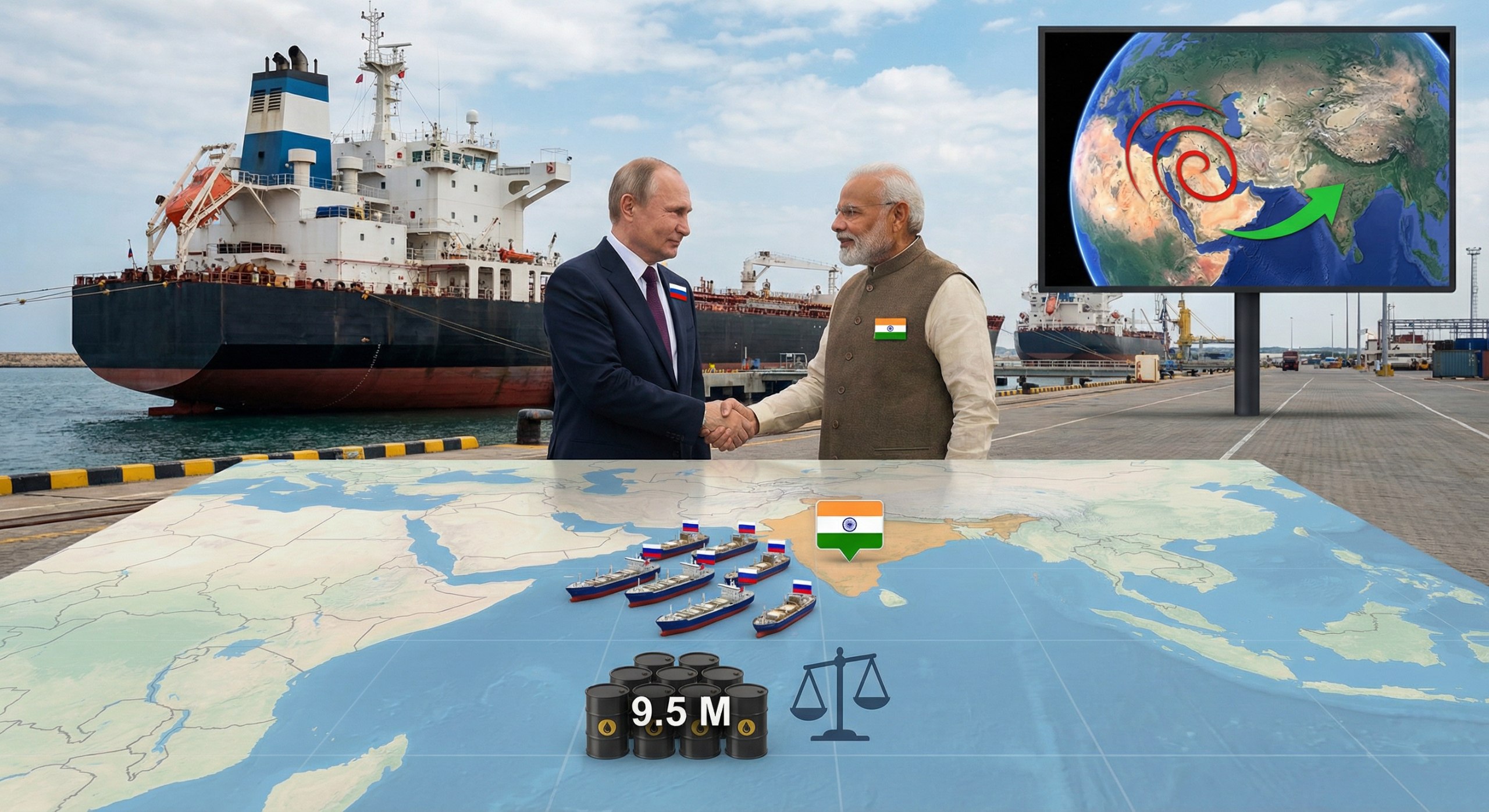
Russia, itself under G7 sanctions, declared on 14 May it was “ready to supply 9.5 million barrels of crude to India on short notice.” Market data show at least three aframax tankers that loaded at Novorossiysk in early May have re-routed from Qingdao to Paradip and Mangalore, shortening voyage time by eight days.
“Russian barrels are being offered at ICE Brent minus $14–16 with 90-day credit; no other originator can match that today.”
— Refinitiv Oil Research note, 16 May
Washington has reiterated that buyers of Russian crude above the G7 price cap “risk secondary sanctions,” but Indian refiners note the US administration has not clarified enforcement rules for non-EU entities.
The View from Delhi
New Delhi’s immediate concern is physical supply, not diplomatic optics. Strategic Petroleum Reserve (SPR) holdings stand at 39 million barrels—equal to 9.5 days of net imports—while refiners’ on-site stocks add another 15 days. Even with 10 % demand curtailment, India would exhaust inventories in 50 days if Hormuz traffic stops completely. That horizon is shorter than Japan’s 230-day cover and China’s 200-day buffer, leaving India the most vulnerable large Asian importer.
Russian crude, although heavier and higher in sulphur, can substitute for 35–40 % of lost Middle-East grades without major refinery rejig. The discount widens India’s product export surplus, helping to moderate the current-account deficit that widened to 2.2 % of GDP in Q4 FY24. Yet increased dependence on Russia re-introduces reputational risk: the US Congress is debating a “secondary tariff” bill that could levy 25 % duties on non-market oil, a category that would technically include Russian barrels even if purchased below the $60 cap.
Strategic Implications
1. Inventory calculus: Every $1 increase in Brent adds roughly $1.6 billion to India’s annual import bill; at $90/bbl the incremental cost equals 0.4 % of GDP, sufficient to erase the fiscal cushion built into FY25 budget assumptions.
2. Diversification ceiling:
Long-haul Atlantic suppliers (US, Brazil, Guyana) can replace maximum 0.8 mb/d of lost Gulf barrels; freight would add $3–4 per barrel, keeping domestic pump prices elevated into state-election season.3. Negotiating leverage: Moscow’s eagerness to lock in another Asian outlet gives Delhi room to seek rouble-denominated payments, further insulating India from future dollar-sanction risk but complicating already tense US trade ties.
4. Security footprint: India has no military assets in-theatre capable of escorting tankers through Hormuz; any US-led maritime coalition will expect political alignment, forcing Delhi to calibrate statements on Middle-East escalation with energy-security imperatives.
The bottom line: a prolonged conflict that keeps Brent above $85 forces India either to absorb a permanent fiscal shock or deepen energy links with sanctioned suppliers—both paths carry measurable sovereignty costs.