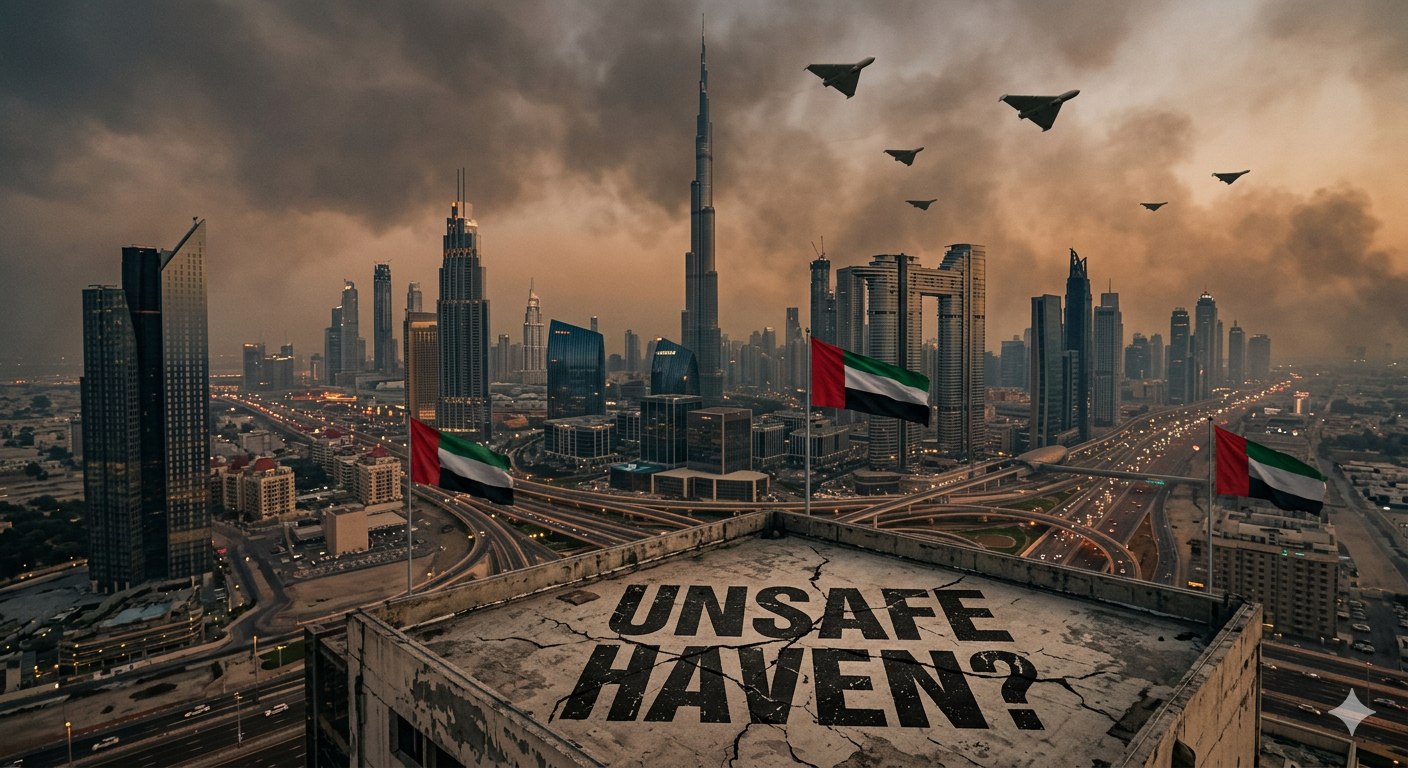
DUBAI: A wave of Hindi-language social-media clips—none confirmed by UAE or Iranian authorities—alleges that Iranian missiles and drones have struck Dubai's coastal hospitality clusters, including areas around Burj Khalifa and Jebel Ali free-zone. The posts show plumes of smoke over waterfront high-rises and claim departures of Indian, American and British nationals. No independent verification or official casualty count exists; UAE government statements are absent from the source.
The Geopolitical Reality
The viral narrative fits a wider pattern: Tehran, unable to reach the continental United States and facing layered Israeli air defences, is accused of targeting the lower-defended Arab economies that host U.S. pre-positioning facilities. Washington’s declared air campaign against Iran—branded “Operation Epic Fury”—is designed to erode the Islamic Republic’s military infrastructure over “three-to-four weeks”, according to a recent post cited in the transcript.
By striking—or being seen to strike—Dubai and other Gulf hubs, Iran may hope to raise the economic price for its neighbours’ tacit logistical support to U.S. operations. The tactic also pressures Gulf monarchies to lobby Washington for a rapid cessation of strikes, especially if investor confidence evaporates.
“Iran’s current leadership appears to have adopted a strategy of imposing maximum cost on Gulf states that cannot retaliate without risking their own economic model.”
— Various Geopolitical Think Tanks
France has reportedly forward-deployed Rafale fighters to UAE bases for “monitoring”, signalling European concern over freedom of navigation through the Strait of Hormuz. Meanwhile, satellite imagery—referenced but not provided—purports to show scorch marks on Dubai’s artificial islands, a symbolic hit to the “Pearl of the Gulf” brand cultivated over the past decade.
The View from Delhi
For Indian planners, the footage—authentic or not—validates a long-standing assessment: Gulf city-states are high-value but highly vulnerable nodes in India’s energy and remittance chain. Roughly 3.5 million Indian citizens reside between Kuwait and Oman; annual remittances exceed USD 45 billion. Any perception that Dubai’s safe-haven status is eroding accelerates evacuation requests and raises insurance premiums on the UAE-India cargo corridor.
New Delhi prizes strategic autonomy; it will not join U.S.-led strikes. Yet Delhi also cannot veto Iranian responses that imperil the diaspora. The episode underlines the merit of India’s multi-alignment hedge: maintain cordial ties with Tehran for energy discounts and the International North-South Transport Corridor, while deepening defence logistics pacts with Abu Dhabi and Riyadh to safeguard evacuation routes.
Strategic Implications
- Dubai Brand Risk: A prolonged conflict could compress tourism receipts, real-estate demand and the golden-visa programmes marketed to affluent Indians.
- Missile-Defence Gap: Unlike Riyadh’s Patriot umbrella, Dubai’s shorter-range interceptors may invite French or even Indian surface-to-air offers—raising questions on technology-transfer terms.
- Escalation Pathway: If the UAE or Qatar perceive direct economic strangulation, they might open bases to European sorties, turning the Gulf into a wider conventional theatre.
- Information Fog: The transcript concedes earlier fake claims (e.g., sinking a U.S. carrier). Delhi must therefore weigh social-media noise against satellite and SIGINT before advising citizen repatriation.
The core uncertainty remains: whether Iran’s leadership calculates that economic pain inflicted on Dubai will fracture the U.S. coalition, or instead harden Gulf monarchies into co-belligerents. For India, the safest assumption is that Gulf volatility is structural, not episodic, and evacuation contingencies must now cover simultaneous threats across Kuwait, Qatar and the Emirates.