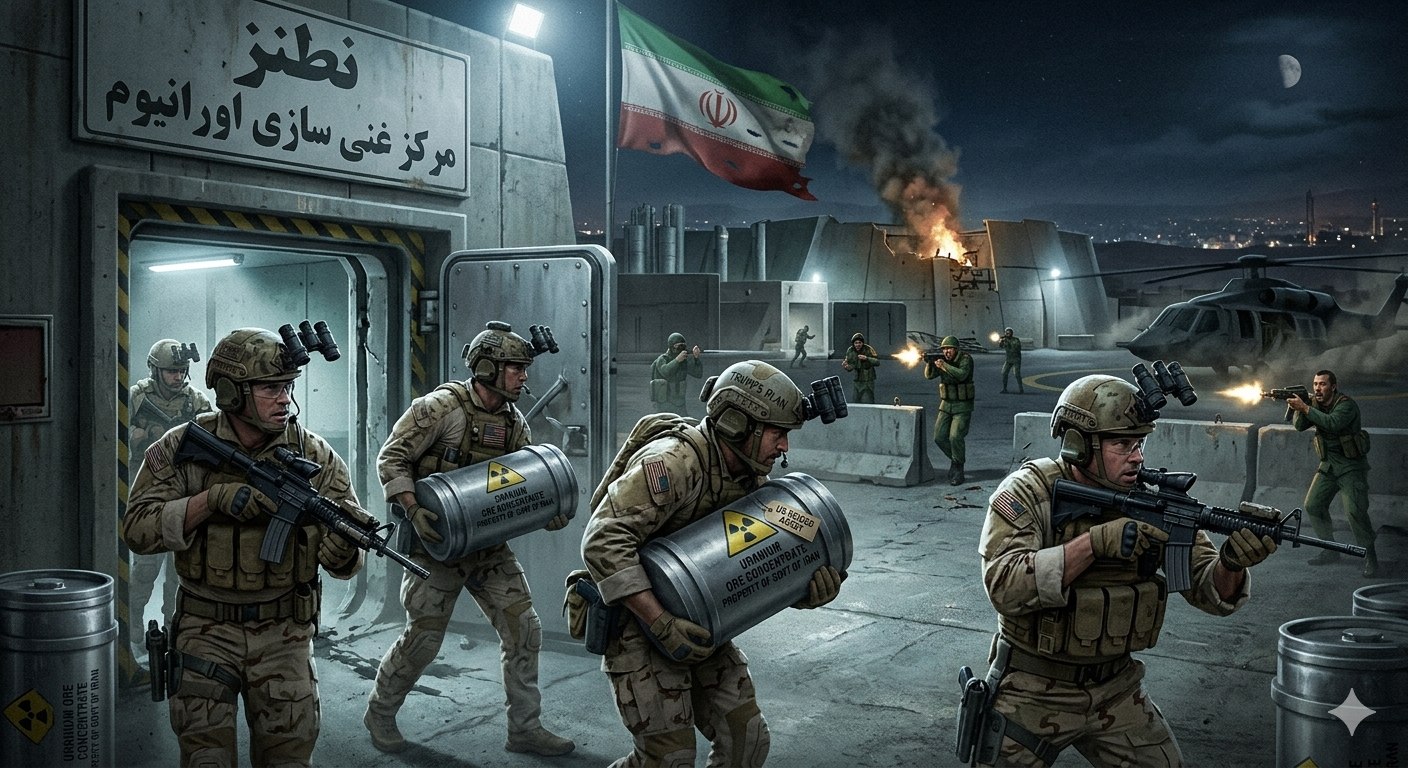
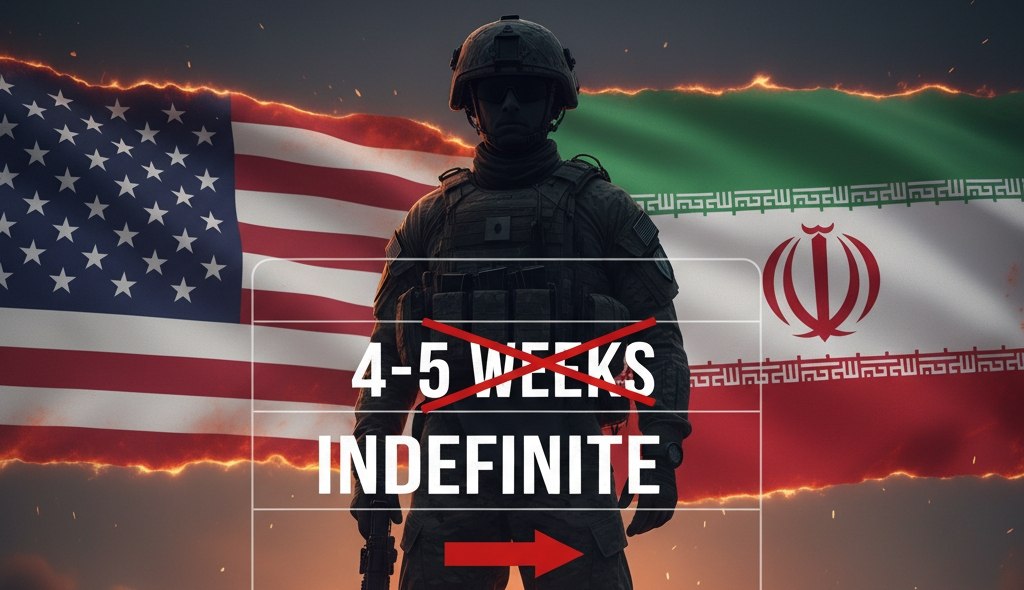
WASHINGTON: President Donald Trump told reporters the military operation against Iran will continue for “four-to-five weeks, maybe longer,” refused to rule out sending US ground troops, and urged NATO allies to contribute combat support. Tehran has responded by declaring the Strait of Hormuz closed to oil traffic and threatening strikes on any vessel transiting the chokepoint.
The Geopolitical Reality
The US-led air campaign is expanding beyond missile and drone sites to Iran’s long-range missile industrial base. Washington’s stated end-state includes the elimination of Tehran’s strategic rocket arsenal and installation of an interim government—an objective that implies sustained strikes and potentially a naval blockade.
European capitals have accepted limited supporting roles—intelligence, bases, refuelling—but NATO as an alliance officially refuses to enter combat. Secretary of State Marco Rubio warned “the hardest hits are yet to come,” fuelling speculation that undisstood conventional or cyber capabilities will be unveiled.
- Duration Signal: Trump emphasised he will not “get bored,” explicitly preparing domestic opinion for months of operations.
- Casualties: At least six US military fatalities confirmed; regional sources suggest the number may be higher.
- Energy Market: Brent futures rose sharply after Iran’s Hormuz closure announcement; Asian refiners publicly disclosed draw-down schedules from strategic stocks.
Asian economies account for roughly 80 percent of the 17 million barrels per day that normally transit Hormuz. Japan says it holds 250 days of oil cover; India last week reiterated its 74-day strategic reserve.
“The hardest hits are yet to come.”
— US Secretary of State Marco Rubio
The View from Delhi
For Indian planners, the primary worry is import disruption rather than direct military exposure. Roughly 55 percent of India’s seaborne crude and 75 percent of its LNG flow through the strait; a six-week closure would force refiners to draw down 40 million barrels of strategic storage and accelerate spot purchases of US, West African or Russian crude—each option carrying price or payment-sanction risk.
Secondary effects include a wider current-account deficit, rupee pressure, and imported inflation at a moment when domestic food prices are politically sensitive. Strategists also note the China opportunity cost: prolonged US focus on the Middle East reduces Washington’s bandwidth for simultaneous Indo-Pacific contingencies, a calculus Beijing is watching closely.
Strategic Implications
A multi-month war raises three near-term dilemmas for New Delhi:
- Oil sourcing: Returning to discounted Russian barrels could invite fresh CAATSA scrutiny from Washington just when US-India defence ties are deepening.
- Basin re-balancing: If US redeploys Patriot batteries from South Korea or Japan to the Gulf, deterrence against North Korean opportunism—and Chinese pressure on Taiwan—diminishes.
- Energy diplomacy: India may have to coordinate IEA stock releases with Tokyo and Seoul while quietly negotiating waivers for Iranian back-channel purchases, testing its autonomy doctrine.
The longer Hormuz stays closed, the sharper the trade-off between economic stability and strategic compliance with US sanctions architecture. New Delhi’s default posture—multi-alignment and strategic autonomy—will be stress-tested if Washington demands explicit political endorsement of regime-change objectives in Tehran.