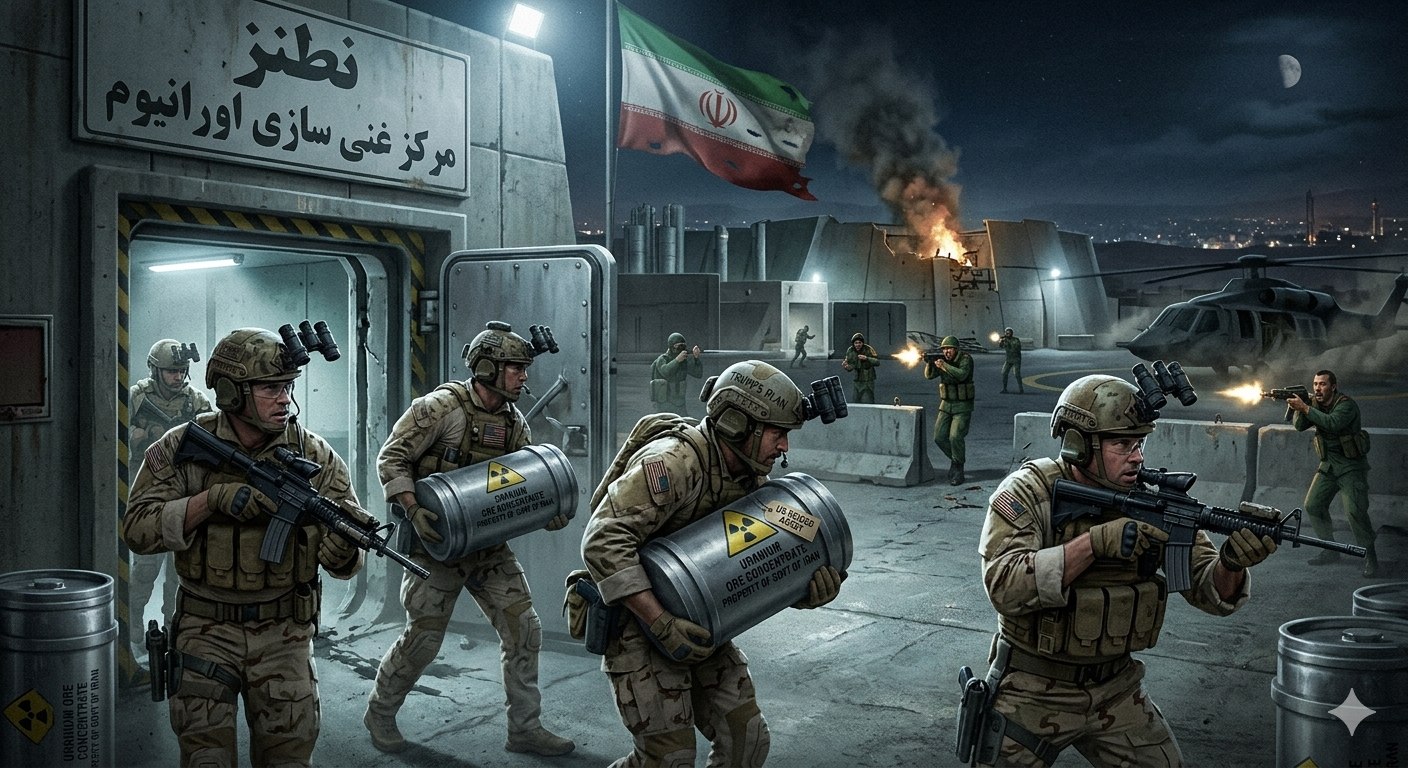
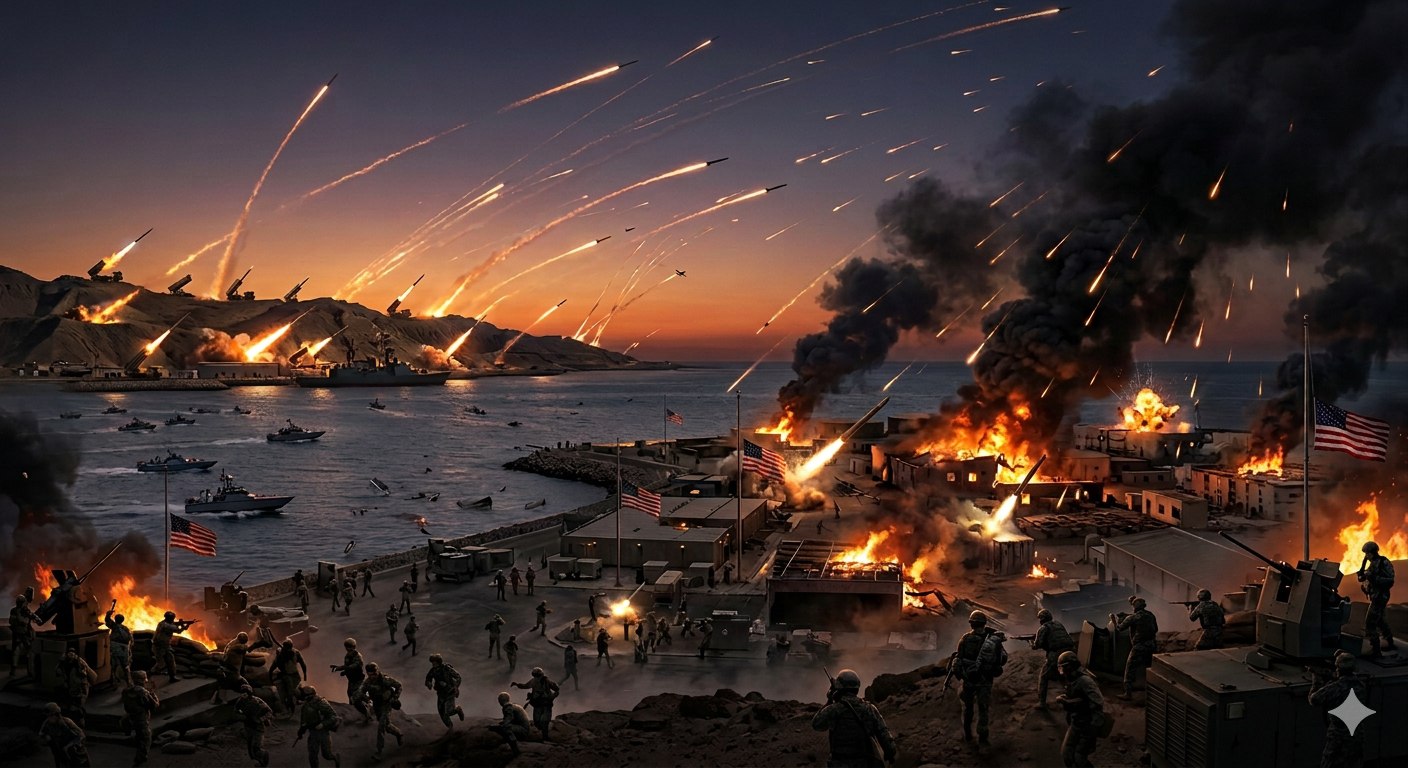
Washington: The 18-day US-Israeli military campaign against Iran has left over 2,000 civilians dead, downed multiple American fighters and pushed Brent crude to $105/barrel, forcing the Pentagon to rush air-defence units from South Korea and admit—publicly—that it “did not expect” Iranian retaliation against Gulf Arab partners.
The Geopolitical Reality
Iran’s missile strikes on Qatar, Saudi, UAE and Bahraini energy sites have ruptured the post-1991 security architecture that kept oil flowing under US protection. Washington now faces a three-front dilemma: suppress Iranian missile capacity without a ground invasion, reassure Gulf allies who were blindsided, and contain crude prices before they asphyxiate the fragile global recovery.
- 2,000+ dead: Predominantly civilians; military casualties “relatively low”.
- $105 Brent: Highest since 2013; Asian refiners already front-loading April cargoes.
- Downed jets: At least five US F-15E and F-35 airframes lost; confirmation awaited.
- Reinforcements: THAAD batteries redeployed from Osan to undisclosed Gulf locations.
Tehran’s calculation appears straightforward: demonstrate reach against US partners, raise the economic cost for Washington, and negotiate from a position of parity rather than surrender. The White House, by contrast, is signalling that its original objective—rapid decapitation of the clerical regime—has quietly given way to limiting domestic humiliation.
“We did not expect they would fight back this way.”
— Donald Trump, US President
Russia and China have begun military resupply flights to Bandar Abbas, seeking to prolong the conflict enough to exhaust US precision-guided stocks and erode American deterrence in Europe and the Indo-Pacific.
The View from Delhi
India imports 85 % of its crude; every sustained $10/barrel spike adds roughly $15 billion to the annual import bill and widens the current-account deficit by ~0.4 % of GDP. New Delhi therefore has a material interest in an early cease-fire, yet its leverage rests on two asymmetrical relationships: a $40 billion energy-trade nexus with Gulf Arabs and a sanctioned but functional rupee-clearing mechanism with Iran.
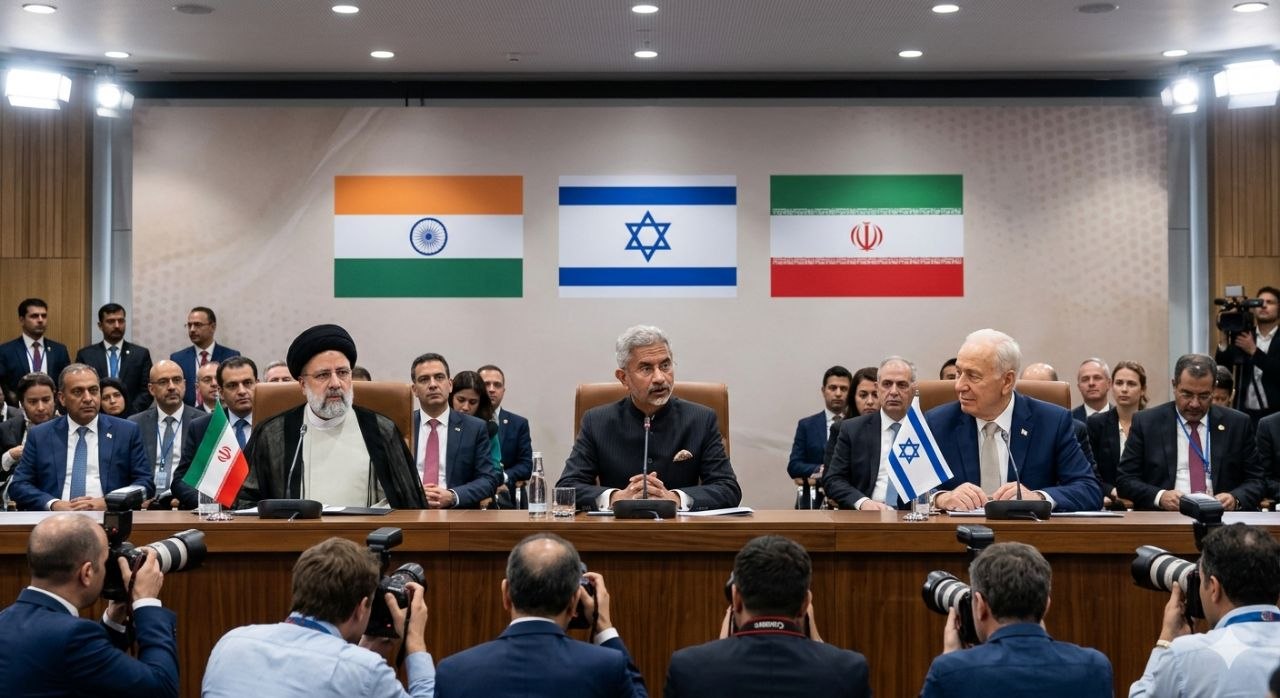
Finland’s President, echoing a growing chorus in Brussels, publicly suggested that only India enjoys “simultaneous credibility” in Washington and Tehran. Delhi’s diplomats have so far limited themselves to calling for “maximum restraint”, allowing Indian-flagged tankers to transit the Strait of Hormuz under naval escort and positioning itself as a message-carrier rather than a guarantor.
Strategic Implications
A protracted war will tighten the global crude market by up to 3 mb/d this summer, forcing India either to accelerate Russian crude purchases—at geopolitical cost—or to draw down strategic petroleum reserves that cover barely 9 days of consumption. Politically, Delhi must calibrate: overt mediation could expose it to Iranian demands for written security assurances and reparations—terms Washington views as capitulation—while remaining aloof risks being sidelined if Russia and China emerge as the new guarantors of Gulf security.
The more immediate risk is contagion: Trump has already floated a Cuba operation to offset the optics of Iranian failure. Any simultaneous US opening in the Caribbean would split American naval assets, raise Russian naval visits to Havana, and test India’s historic ties with both Caracas and Havana. For Indian planners, the question is no longer whether the Middle Eastern war ends, but whether it ends before global energy volatility becomes structural and before great-power competition migrates irreversibly to India’s extended maritime neighbourhood.