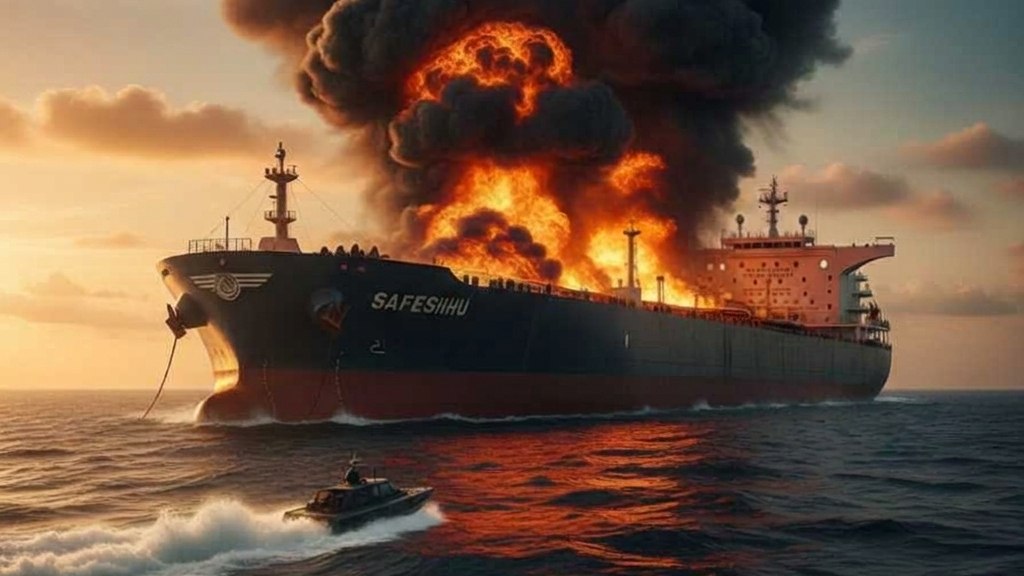
Washington: The U.S.-flagged crude tanker Sea Vishnu was rammed on Wednesday by an Iranian-operated suicide boat carrying an estimated 500 kg of high explosives, killing one Indian deck rating and igniting a fire in the forward cargo area, according to U.S. Central Command imagery released early Thursday.
The Geopolitical Reality
The attack—filmed by a passing product tanker—marks Tehran’s first use of a surface-borne improvised explosive device against a U.S.-owned asset since 1988. Revolutionary Guard commanders have since February warned they would “raise the maritime cost” for countries backing Israel, explicitly naming oil exports as leverage.
- Target: 1997-built, 298k-dwt Suezmax carrying 650k bbl Gulf crude.
- Method: Fibreglass skiff packed with RDX, remotely piloted by drone link.
- Location: 45 nm SE of Iraq’s Al-Faw peninsula, outside normal Hormuz patrol grid.
- Price Shock: Brent futures jumped $4.20 to $91.35 within two hours of footage release.
“If insecurity spreads beyond the Strait, the barrel reaches $200—no tanker owner will self-insure.”
— Revolutionary Guard naval comms intercept, 13 Feb
Washington has not announced retaliation, but the White House cancelled a scheduled sanctions waiver for Iranian electricity sales to Iraq, effectively choking $1.2 bn in quarterly payments to Tehran.
The View from Delhi
New Delhi imports 82 % of its crude by sea; 55 % transits the Persian Gulf. An Indian fatality inside what Iran terms a “legitimate economic-war target” complicates India’s neutrality playbook: Delhi needs both discounted Russian barrels and open Gulf sea lanes to keep domestic pump prices stable ahead of state elections.
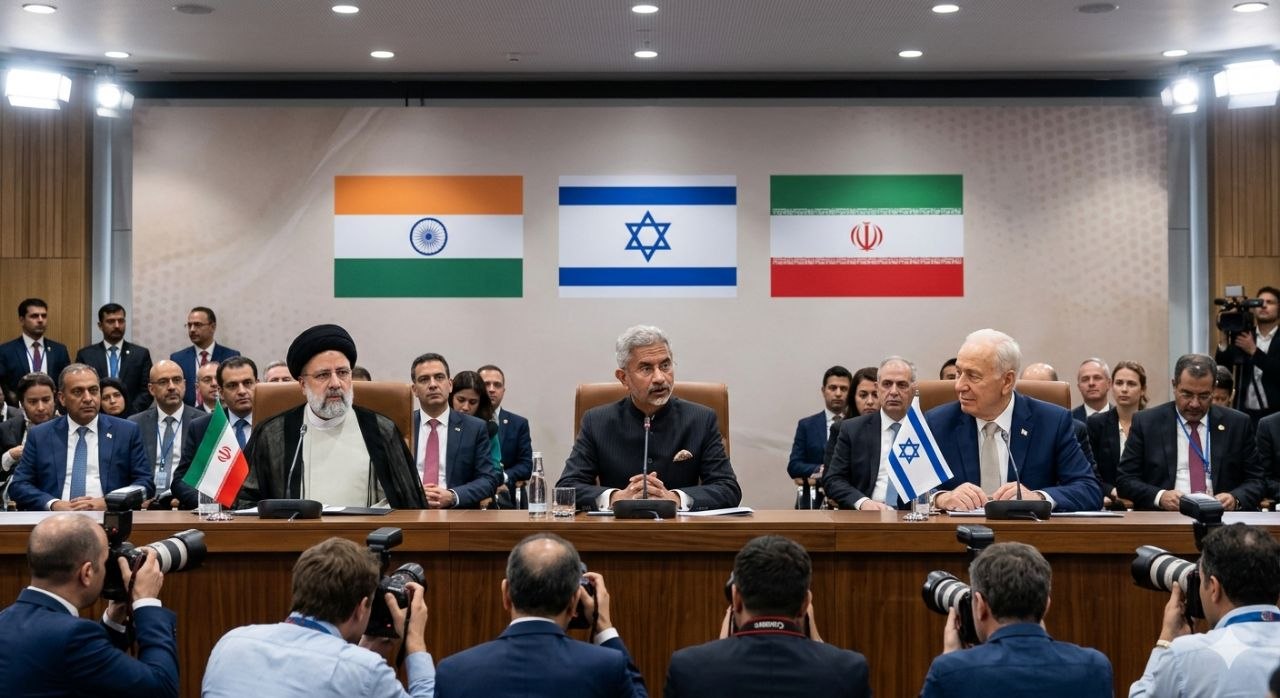
External Affairs Minister S. Jaishankar spoke to his Iranian counterpart on 11 February; Tehran promised safe passage for Indian-flagged hulls but reserved the right to hit any cargo “benefiting the U.S.-Israel axis.” Delhi has not condemned either side by name, repeating only that “civilian shipping must remain inviolate.”
For Indian strategists, the episode confirms two structural shifts: first, Iran’s threshold for escalation now includes commercial crews of non-aligned states; second, insurance surcharges will add an estimated $1.6 to every barrel India lifts from the Gulf, eroding the competitive edge of discounted Russian crude.
Strategic Implications
Tehran’s three publicly stated cease-fire conditions—recognition of its “right” to uranium enrichment, reparations “in the tens of billions,” and multilateral security guarantees against future Israeli strikes—are non-starters for both Washington and Jerusalem, implying a protracted shadow campaign on energy infrastructure.
India faces a trilemma: accelerating strategic petroleum reserve releases could cushion prices through April, but empty caverns heighten exposure if monsoon-season imports coincide with further Gulf attacks; pressing Iran diplomatically risks endangering the Chabahar port project; aligning overtly with the U.S.-led maritime coalition invites retaliatory harassment of Indian crews on global shipping registers.
The most probable near-term trajectory is episodic, deniable strikes on third-flag tankers, keeping risk premiums elevated but below the $200 threshold that would trigger coordinated SPR releases by the IEA core group. Delhi’s optimal response space therefore lies in quiet underwriting of Oman-India-Iran backchannel talks while expanding crude sourcing from the Atlantic basin—an option that remains costlier by $3–4 per barrel.