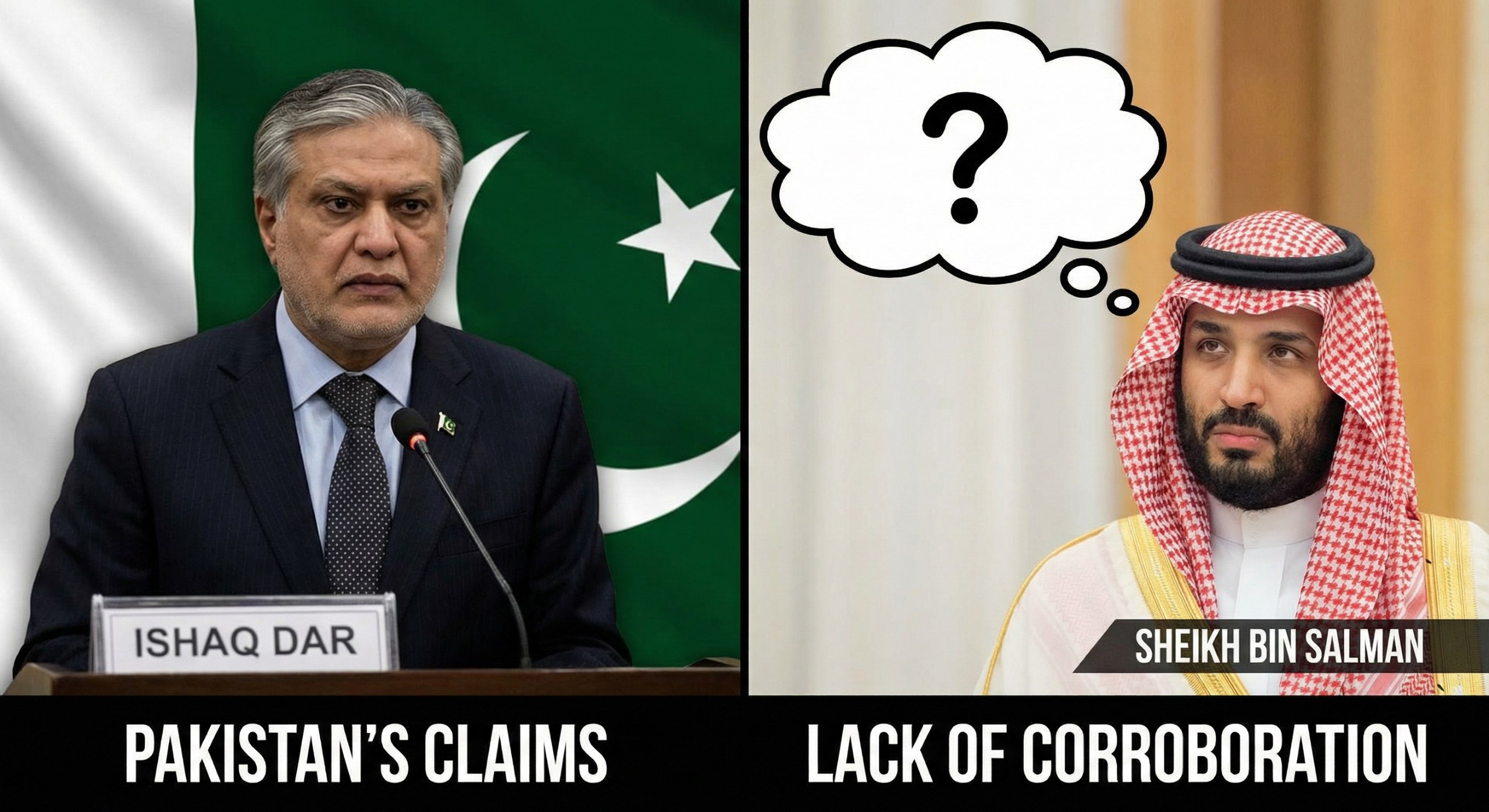
Islamabad: Iranian drones struck multiple Saudi energy facilities last week, according to commercial satellite images and U.S. media reports that cite an attack on a CIA station in Riyadh. Pakistan’s Deputy Defence Minister Ishaq Dar responded by invoking a 2015 mutual-defence agreement with Riyadh, saying he personally “sensitised” Iranian interlocutors that Islamabad would be “forced to act” if the strikes continued. Riyadh and Tehran have issued no official statements confirming Pakistani mediation or any resultant reduction in attacks.
The Geopolitical Reality
The Gulf security architecture built around U.S. power is fraying. Washington is repositioning assets out of Iraq and has not retaliated for the reported loss of American lives in the Riyadh drone strike, signalling a deterrence gap that Iran is exploiting. Riyadh’s 2015 decision to formalise a defence pact with Islamabad was premised on the assumption that Pakistan’s army—2.3 million strong and nuclear-armed—would provide a rapid-reaction reserve for the Kingdom. Eight years on, the pact has never been activated; Pakistani troops are tied down on the Afghan frontier and the army is internally debating the cost of opening a second front.
"We are bound by that sovereign agreement … I gave assurances that their soil will not be used."
— Ishaq Dar, Deputy Prime Minister & Foreign Minister, Pakistan
Meanwhile, the Strait of Hormuz remains partially blocked, Asian benchmark crude has risen 8 % since the strikes, and insurance premiums for Gulf voyages have doubled. Neither the Arab League nor the OIC has convened an emergency session, underscoring the regional preference for bilateral—or silent—diplomacy.
The View from Delhi
New Delhi’s immediate concern is energy flow: 60 % of India’s seaborne oil transits the Persian Gulf. A sustained drone campaign that degrades Saudi and Emirati export capacity would spike the Indian import bill and widen the current-account deficit. Strategically, Indian planners read the Pakistani statements as an attempt to re-cast deterrence without crossing the threshold into kinetic action; Islamabad’s leverage is rhetorical because any military move against Iran would open a western front while the eastern border with India remains live.
India has no defence commitments in the Gulf, but the 8 million Indian expatriates who remit USD 45 billion annually are concentrated in the very cities—Riyadh, Dammam, Abu Dhabi—now within Iranian range. Delhi therefore favours a quick de-escalation, yet quietly welcomes visible stress on Pakistani forces who must simultaneously police the Afghan border, deter India, and now posture against Iran.
Strategic Implications
- Pact Credibility: If Riyadh concludes that Islamabad cannot deliver combat power, Gulf states may accelerate diversification toward Turkey, Israel or direct U.S. basing—reducing future space for Pakistani labour exports.
- U.S. Pressure Vector: Washington could condition future IMF bail-outs for Islamabad on measurable support to Gulf security, forcing Pakistan to choose between sovereign default and limited military cooperation.
- Iranian Calculus: Tehran’s willingness to strike a CIA facility suggests it assesses U.S. domestic politics as restraining retaliation; India must factor a bolder Iran into its Chabahar port and Central Asian transit plans.
- Market Signal: Indian crude inventories cover 64 days, giving Delhi a two-month buffer to arrange alternative supplies if Gulf exports are further disrupted.
The episode confirms that middle-power defence agreements signed in quieter times can become political liabilities when great-power deterrence erodes. For India, the Gulf’s slide toward bilateral force postures increases the premium on maritime domain awareness and swift coordination with U.S. Central Command—without entangling India in any formal alliance.