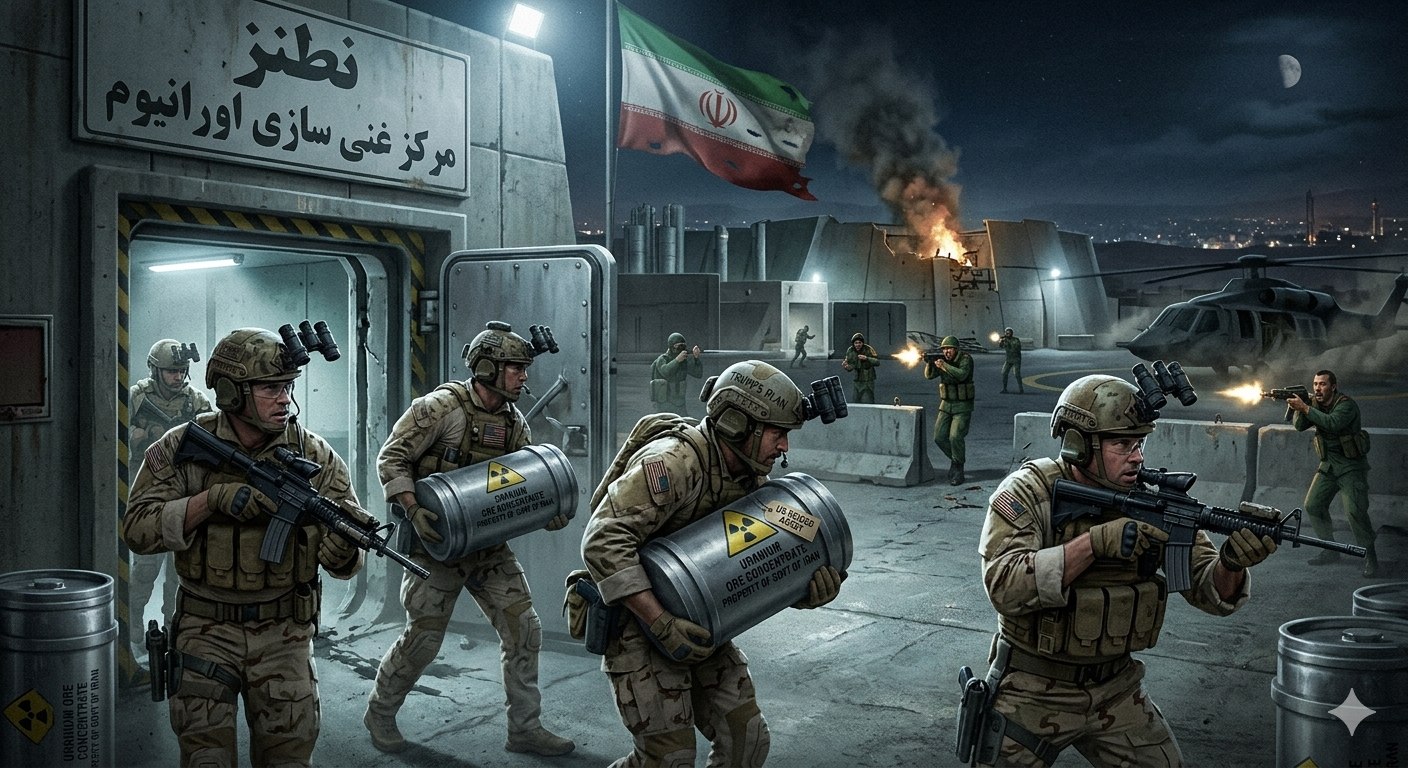
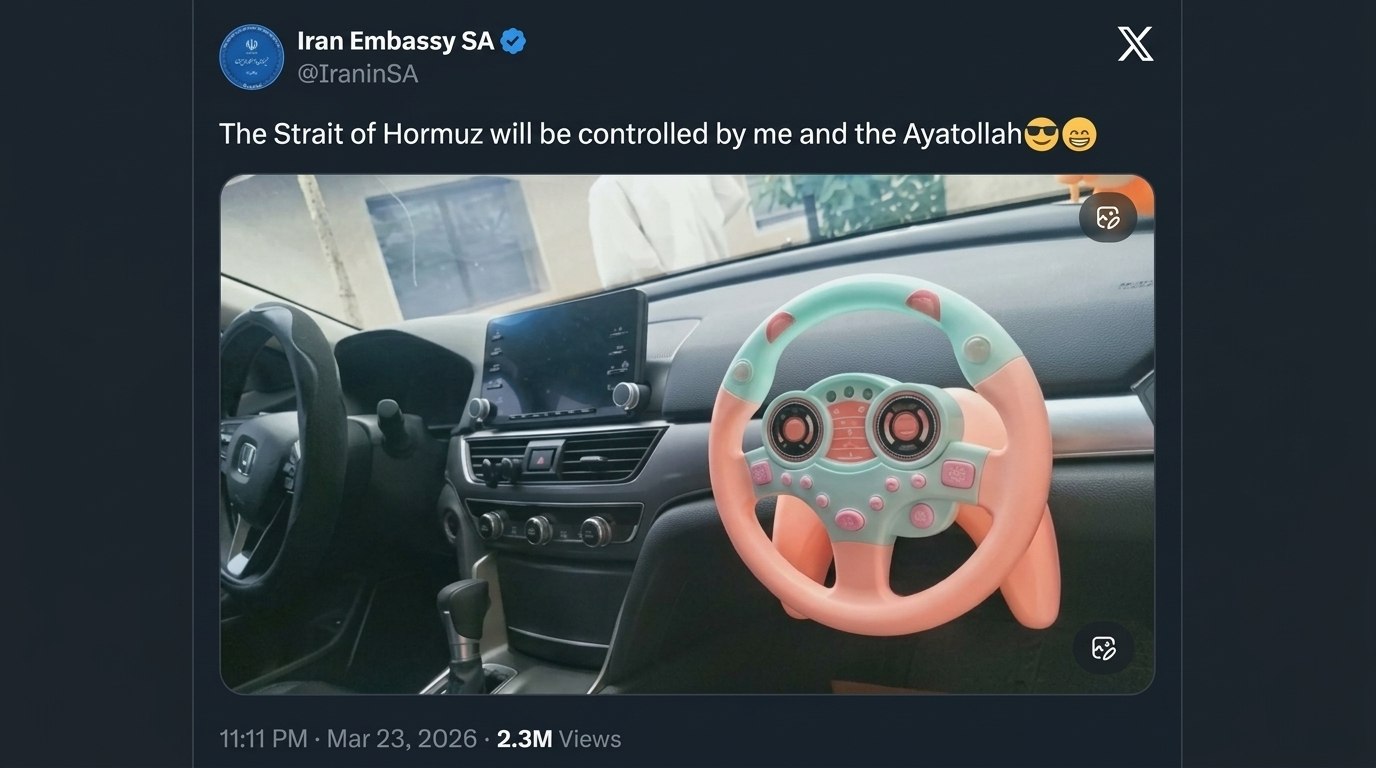
TEHRAN: Iran’s armed-forces spokesman has released a video rejecting any direct talks with Washington and deriding President Donald Trump’s suggestion that the Islamic Republic and the United States jointly manage the strategic Strait of Hormuz. The statement follows weeks of U.S. airstrikes on Iranian-linked targets and Iranian missile responses that have kept the waterway under a partial de-facto blockade.
The Geopolitical Reality
Control of the Strait of Hormuz—through which about one-fifth of traded oil transits—has become the focal point of a confrontation that neither side appears able to end on its own terms. Washington’s initial demand for a unilateral reopening of the choke-point has shifted to a proposal for joint patrols, a move interpreted in Tehran as evidence of U.S. hesitation over deeper conflict.
- Energy Markets: Brent crude has risen 14 % since mid-March on transit-fear premium.
- Force Posture: A U.S. carrier group remains outside the gulf after reported near-miss missile fire.
- Allied Response: NATO, France, U.K., Germany and Australia have so far declined to commit naval escorts.
Tehran’s calculus appears to rest on two assumptions: that domestic U.S. fatigue limits appetite for a ground campaign, and that sporadic but calibrated strikes on shipping and regional bases suffice to keep Washington off balance without triggering full-scale war.
“Hey Trump, you are fired … thank you for your attention to this matter.”
— Brig. Gen. Abolfazl Shekarchi, Iranian Armed Forces
The View from Delhi
New Delhi has no direct role in the stand-off, yet the episode sharpens two long-standing Indian concerns. First, any sustained closure of the strait would instantly inflate India’s import bill; roughly 65 % of India’s seaborne crude passes through those waters. Second, the spectacle of a super-power being publicly taunted undercuts the deterrence model India implicitly relies on to keep Gulf sea lines open while it focuses on the Indian Ocean.
More broadly, a perceived U.S. inability to translate military primacy into political outcomes emboldens other sanctioned actors—an outcome Indian planners must weigh when calibrating ties with Iran, Russia and North Korea.
Strategic Implications
The longer the impasse drags on, the more Tehran can normalise its ability to choke energy flows without facing coalition reprisal. For India that scenario raises the probability of:
- Supply Volatility: Forcing Delhi to accelerate costly diversification to U.S. and Brazilian crude.
- Insurance Spikes: Indian refiners already face a 20 % war-risk surcharge on Gulf voyages.
- Strategic Hedging: Heightened incentive to keep the Chabahar port corridor insulated from sanctions.
Should Washington ultimately authorise a large-scale operation, India would confront the diplomatic dilemma of endorsing a campaign that could cripple its energy imports while refusing risks eroding strategic trust with the United States. The episode therefore leaves New Delhi with a narrower margin for neutrality and a renewed imperative to expand petroleum stockpiles and alternate supply routes before the stand-off hardens further.