
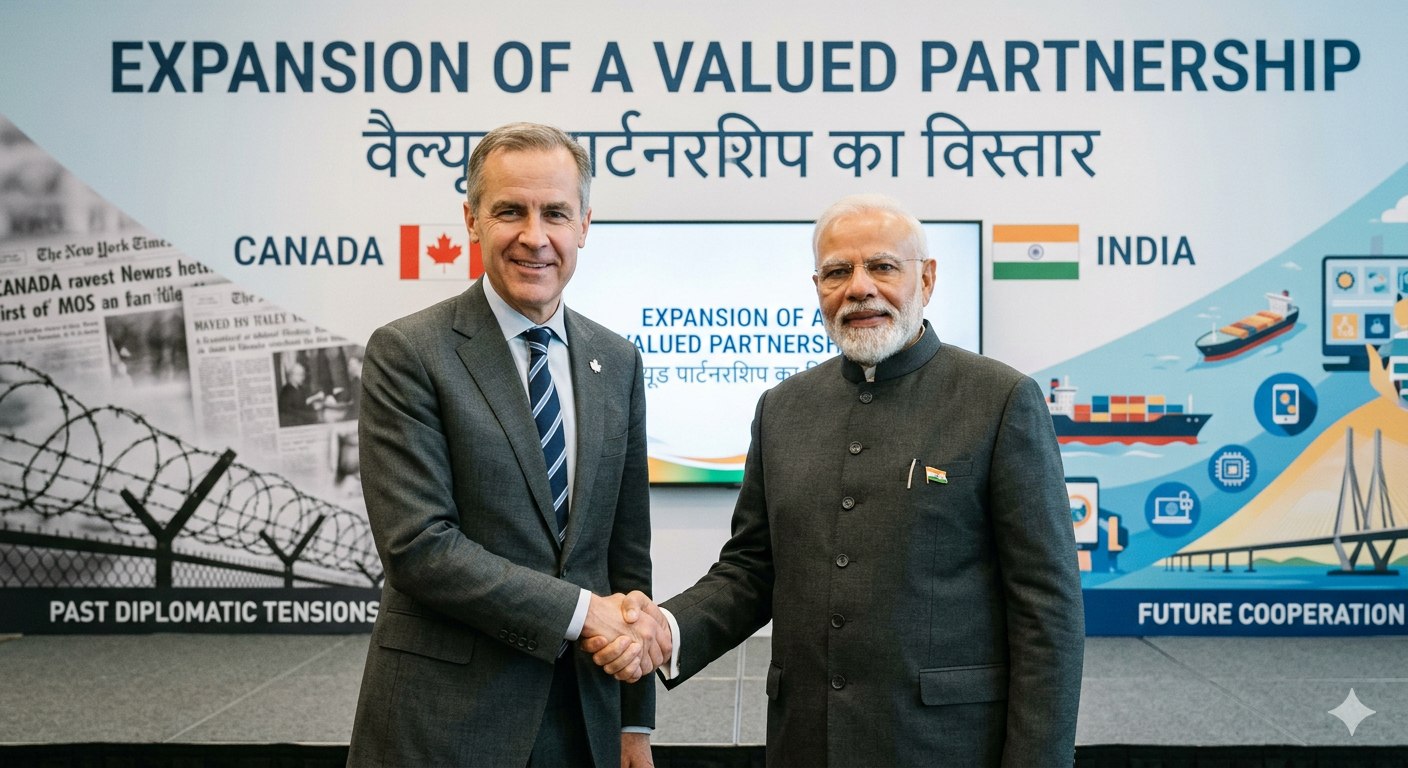
OTTAWA/NEW DELHI: Canada and India have concluded a ten-year uranium supply contract valued at CAD 2.6 billion (≈ USD 1.9 bn), according to multiple industry briefings confirmed by Canadian officials on 14 April. The deal, signed during Prime Minister Mark Carney’s two-day visit to New Delhi, will see Canada’s Cameco deliver natural-uranium concentrate to India’s Department of Atomic Energy beginning 2026.
The Geopolitical Reality
The accord ends an eight-year hiatus in bilateral nuclear fuel commerce after Ottawa imposed enhanced safeguards in 2016. Canada holds the third-largest proven uranium reserves; India runs twenty-four pressurised heavy-water reactors and projects demand to double by 2035. Western capitals—pre-occupied with Middle-East escalation and the looming expiration of New START—have reacted sparingly, suggesting quiet approval.
“This is not a renewed relationship; it is an expansion of a value partnership between two confident countries.”
— Mark Carney, Prime Minister of Canada
China’s state media noted Ottawa’s shift: Global Times framed the visit as “shuttle diplomacy” aimed at diluting over-reliance on the United States. Beijing itself failed to secure Canadian uranium in 2012 after Washington objected, underscoring the strategic sensitivity of supply accords.
The View from Delhi
For Indian planners, the contract offers three immediate gains:
- Fuel Security: Guaranteed feedstock buffers against price volatility and potential sanctions on alternate suppliers.
- Non-Proliferation Optics: Canada’s membership in the Nuclear Suppliers Group reinforces India’s clean-track record without reopening exception debates.
- Portfolio Diversification: Reducing dependence on Kazakh and Russian material eases geopolitical leverage others can exercise.
Longer term, access to North-American uranium strengthens New Delhi’s hand in future safeguards negotiations with smaller suppliers. Yet Ottawa’s policy volatility—illustrated by a 2018 diplomatic freeze after the Nijjar affair—remains a structural risk Indian diplomacy must hedge.
Strategic Implications
India’s nuclear expansion is constrained less by uranium than by domestic liability law and slow reactor roll-out. The new supply line therefore offers breathing space rather than a paradigm shift; the strategic upside lies in signalling to Washington that India possesses multiple fuel corridors outside potential U.S. sanctions architecture. For Canada, deepening energy ties with the fastest-growing G-20 economy cushions against unpredictable U.S. trade actions—an incentive that Delhi can leverage to press for early conclusion of the stalled Comprehensive Economic Partnership Agreement (CEPA).
Bottom line: the uranium deal is transactional, but it inserts Canada into India’s long-term energy matrix at a moment when both states are recalibrating risk away from single-partner dependence.