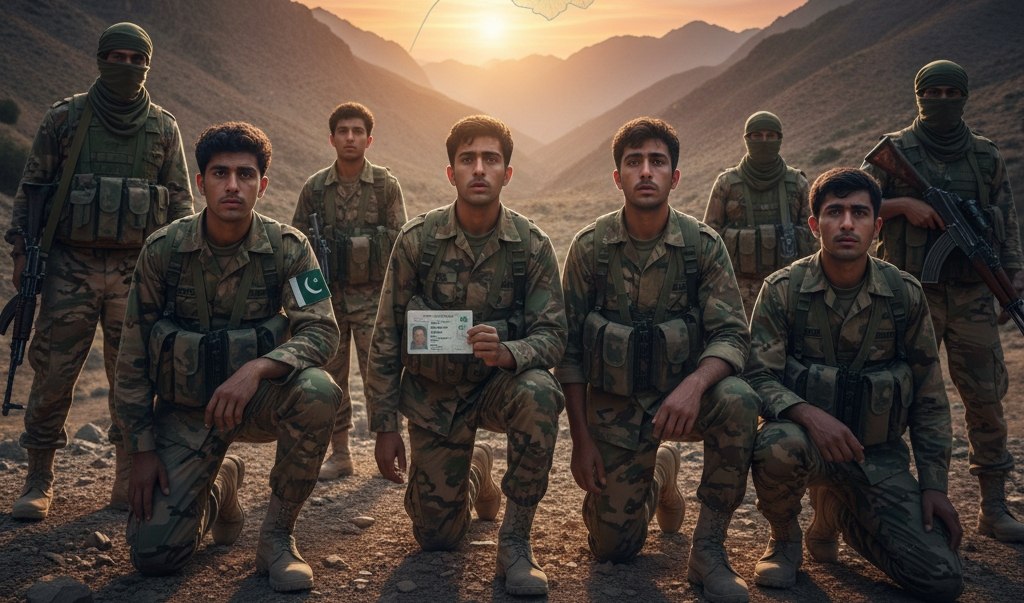
Quetta: The Balochistan Liberation Army (BLA) paraded seven Pakistani soldiers on camera after Islamabad refused to acknowledge their capture, setting a 22 February deadline to swap them for imprisoned Baloch fighters. The army’s silence triggered a media blackout inside Pakistan while social media carried the footage worldwide.
The Geopolitical Reality
The hostage drama underlines a widening legitimacy gap between the Pakistani state and the Baloch periphery. Forty-three per cent of Pakistan’s landmass but barely five per cent of its GDP, Balochistan hosts China’s Belt-and-Road flagship at Gwadar yet sees minimal revenue return. The BLA has moved from hit-and-run attacks to fixed-point captures, signalling improved intelligence and sanctuary depth.
Islamabad’s default response—massive army deployment—competes with a resource crunch. Defence minister statements admit troops are “handicapped” by terrain and overstretch, forcing reliance on air power and proxy tribal militias. The approach repeats the 1970s playbook, but today the insurgency enjoys diaspora funding, global social media traction and a nationalist narrative that portrays the army as an occupying force.
The View from Delhi
New Delhi has no official equities in the BLA’s campaign, yet the spectacle of Pakistani soldiers pleading for state recognition feeds a narrative that Pakistan’s security apparatus is contracting. For Indian planners, three second-order effects matter:
- Force re-allocation: Every battalion pinned down in Balochistan is one less unit available for the eastern border.
- Nuclear shadow: A weakening conventional grip tempts Islamabad to lean on tactical ambiguity; India must monitor warhead storage, not merely LOC skirmishes.
- China exposure: CPEC security costs are being socialised through Pakistani troops; if Beijing perceives reliability risk, it may press for direct PLA protection—altering the Himalayan balance.
India’s public posture of studied silence avoids moral endorsement; the intelligence interest lies in measuring fracture-lines inside Pakistan’s military morale without crossing the line into covert sponsorship.
Strategic Implications
Short term, Pakistan will flood Balochistan with additional divisions, raising the probability of extrajudicial killings and fresh recruitment for separatists. Expect drone strikes to spike, accompanied by deniable cyber activity against diaspora sympathisers.
Medium term, the army faces a credibility dilemma: concede a prisoner swap and embolden copy-cat abductions; refuse and confirm to its own ranks that the state disowns captured personnel. Either path erodes the covenant between soldier and state—a vulnerability India can monitor for signals of institutional stress.
Long term, sustained mineral extraction under duress will require Chinese technical staff and imported security. If the BLA escalates to targeting non-military foreigners, Beijing may demand a security footprint that competes with Pakistani sovereignty, complicating the US–China–Russia triangle in which India seeks room for manoeuvre.
“The nation which forgets its defenders will itself be forgotten.”
— President Calvin Coolidge, 1923