
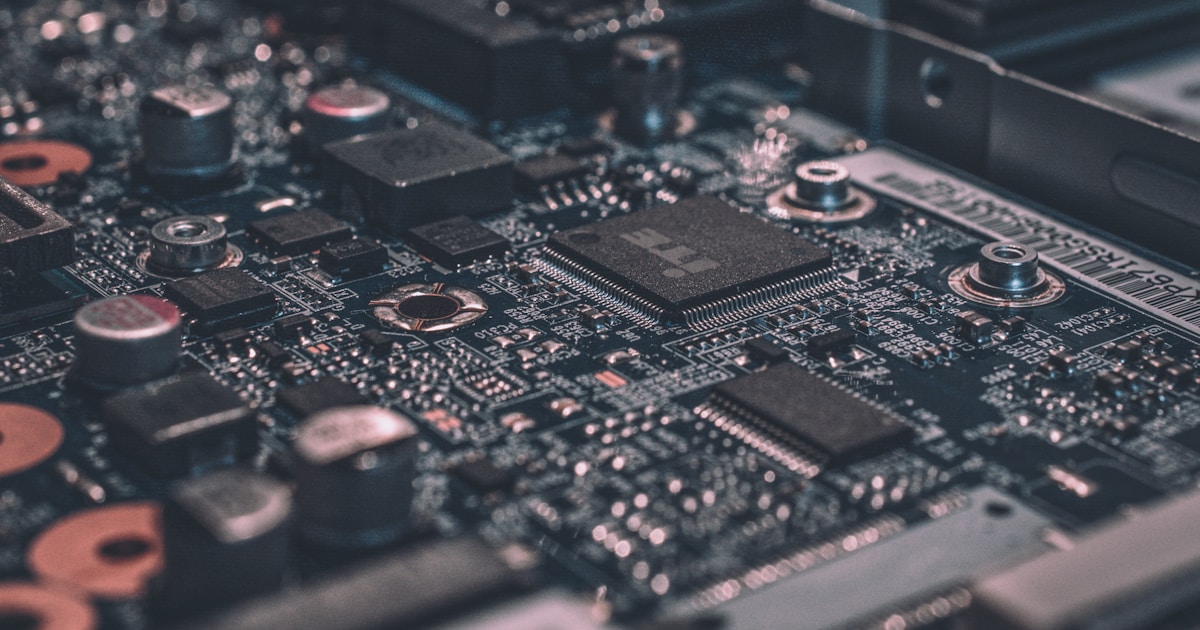
In the 21st century, semiconductors are the new oil. These tiny chips power everything from smartphones to fighter jets, and the nation that controls their production holds significant geopolitical leverage. India, having recognized this reality, has embarked on its most ambitious industrial policy bet yet: the India Semiconductor Mission (ISM).
What Are Semiconductors and Why Do They Matter?
Semiconductors, or chips, are the fundamental building blocks of all modern electronics. They are made from silicon wafers through an extraordinarily complex manufacturing process that requires:
- Extreme precision: Features on modern chips are measured in nanometers (billionths of a meter)
- Ultra-pure materials: Even microscopic contamination can ruin an entire batch
- Massive capital: A single fabrication plant (fab) costs $10-20 billion
- Specialized equipment: Key machinery is made by only a handful of companies globally
Currently, the global semiconductor supply chain is concentrated in a few locations:
- Taiwan: Produces over 60% of global chips and 90% of advanced chips
- South Korea: Memory chip powerhouse
- United States: Design leadership but limited manufacturing
- China: Rapidly building capacity despite US sanctions
The India Semiconductor Mission: Key Details
Launched in December 2021 and revised in 2023, the ISM has the following components:
- Total Outlay: ₹76,000 crore ($10 billion approx.)
- Timeline: 2021-2030
- Government Subsidy: 50% of project cost for fabrication units
- Focus Areas: Fabs, OSAT (assembly & testing), design centers, display manufacturing
Projects in the Pipeline
Several major projects have been approved or are under development:
1. Tata Electronics + PSMC (Taiwan)
A ₹91,000 crore fab in Gujarat's Dholera Special Investment Region. This will be India's first commercial semiconductor fab, producing 28nm and 55nm chips primarily for automotive and industrial applications.
2. Micron OSAT Facility
US memory giant Micron is investing $2.75 billion in an assembly and testing facility in Gujarat, creating 5,000 direct jobs. This facility is already under construction.
3. CG Power and Japan Partnership
A ₹7,600 crore OSAT facility in Gujarat with Japanese technology partners, focusing on automotive chips.
The Challenges Ahead
Despite the ambitious plans, India faces significant hurdles:
-
Talent Gap: Chip manufacturing requires highly specialized engineers. India currently lacks the scale of trained workforce.
Solution: The government has launched a scheme to train 85,000 semiconductor professionals over five years.
-
Water and Power: Fabs require massive amounts of ultra-pure water and reliable power.
Solution: Dholera and other planned locations are being developed with dedicated infrastructure.
-
Ecosystem Development: A fab needs hundreds of suppliers nearby for chemicals, gases, and equipment.
Solution: ISM includes incentives for ancillary industry development.
-
Technology Access: The most advanced chip-making technology is controlled by a few companies (ASML, TSMC) with geopolitical constraints.
Reality Check: India is starting with mature nodes (28nm+), not cutting-edge chips.
"We are not trying to compete with Taiwan or TSMC on cutting-edge chips—that would take decades. Our strategy is to build capacity in mature nodes where demand is growing and supply is constrained."
Strategic Significance
Beyond economics, semiconductor self-reliance has profound national security implications:
- Defence Independence: Advanced weapons systems require trusted chip supplies
- Supply Chain Security: COVID-19 and geopolitical tensions exposed risks of concentration
- Economic Opportunity: The global semiconductor market will exceed $1 trillion by 2030
- AI Leadership: Future AI capabilities depend on custom chip architectures
The Bottom Line
India's semiconductor mission is a multi-decade endeavour. Success won't be measured by competing with TSMC's 3nm chips, but by building a resilient domestic ecosystem that can meet the nation's growing needs—from electric vehicles to defence systems to consumer electronics.
The first phase (2024-2027) will be about proving execution capability. The real test of India's chip ambitions will come in the 2030s, when the fruits of today's investments begin to mature.